
Alaska and Africa
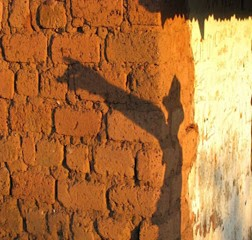
Laurens van der Post, Ian Player, Fyodor Dostoevsky, and many others have written about the profound role of the shadow in the human experience. C. A. Meier, in A Testament to the Wilderness, spoke to this mystery but without knowing the source of this photograph, my own shadow which came alive in remote Africa for him.
In the image, the photographer stands on the right side of a crumbling, graffiti-scribbled wall, reaching around the corner to the other side—directing the viewer’s attention to a transparent, winged dragonfly. The photo was captured on film at a burned-out church at the Lusinga Ranger Station, deep in the rarely visited Congo wilderness.
Opposites like this—what is real and what is not—figure centrally in my story. Alaska, my lifelong home. Africa, where part of my heart and soul have taken up residence decades ago.
Few things are as compelling as comparing opposite, antipodean places on Earth—Alaska and Africa for example. As you join me in this story, you may need to loosen your belt a notch, this adventure has more than a little spice in its soup.
Together, we can stretch to consider the multitude of opposites that always surround us: life and death, man and woman, night and day, sea and shore, near and far, joy and pain, sunshine where the shadow lives, and darkness that holds its own light.
And of course, there is your own shadow—which is of coure you, but not quite you.
My role model, Laurens van der Post, wrote in The Seed and the Sower: “Mpumalanga is Timbavati—the remote place in Africa opposite Alaska. The name translates to “the River of Stars,” where people sometimes see white animals descended from the heavens, believed to be reincarnated Zulu kings”.
It is where the sun rises in Mpumalanga Province, South Africa. The word means East in Zulu—a direction, yes, but also a rich metaphor. A place of beginnings.
Native Alaskan myths are not exempt from similar ancient stories.
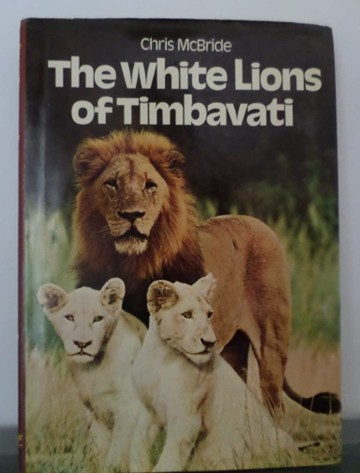
Important to this story are the McBride children of Timbavati—Tabby and Robbie, Morgan and Shannon. Each child grew up familiar with Beethoven’s Fifth Symphony, which begins with a distinctive four-note motif that recurs throughout the piece.
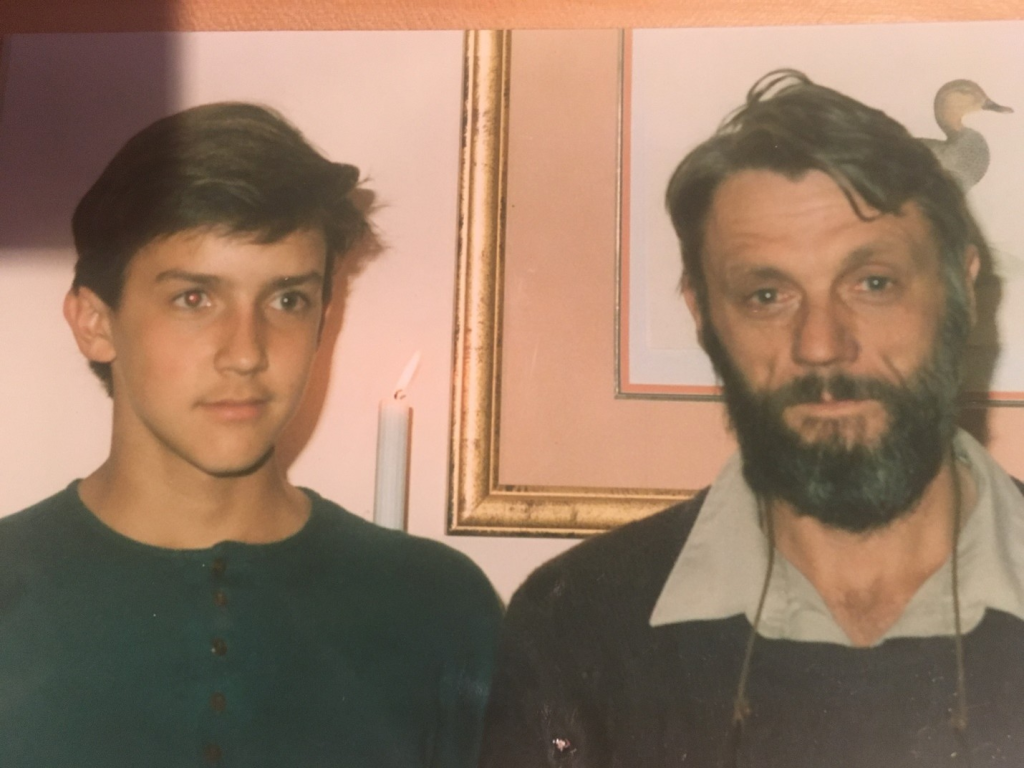
Beethoven described it as “Fate knocking at the door.” During the years that Chris and Charlotte were monitoring the behavior of the lions on his father’s very large land holding called Timbavati, they lured the lions which they needed to observe by baiting with the abundant impala which Chris shot, food for them as well as enticement for the musically oriented lions. They played their favorite music, Beethoven from speakers on the Land Rover and were thus able to follow them at night when the lions made surprising kills on Cape Buffalo in the dark, this was a little-known phenomena in animal behavior science and was an important observation. “One for the books” one could say.
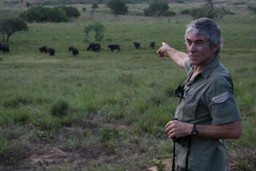
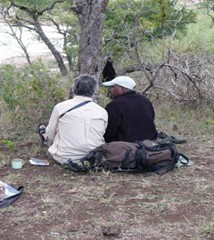
A lioness and three rare white cubs once circled our little sleeping tent just outside the kraal of my Celtic cousin Chris and his wife Charlotte McBride, near a spruit of the Machaon River, close to Kruger Park. The camp sits on the banks of the Nhlaralumi River.
In 1978, I was thirty-five. Diane was thirty-two. Shannon was seven. Morgan was five. Chris, Charlotte, and their children were of similar ages.
Our lives were unalterably changed by those lions in the night.
“The spirit of the white lions still haunts the bushveld…Timbavati is a name so old that today’s inhabitants have forgotten its meaning. It is a landscape seemingly unchanged since our earliest ancestors roamed the earth.”
—The Mystery of the White Lions—Children of the Sun God, Linda Tucker1
The catalyst for this antipodean journey—from Alaska to Africa—was a veritable river of Alaskan salmon that filled our remote commercial fishing nets in 1978 and extravagantly blessed us with more money than we could have imagined.
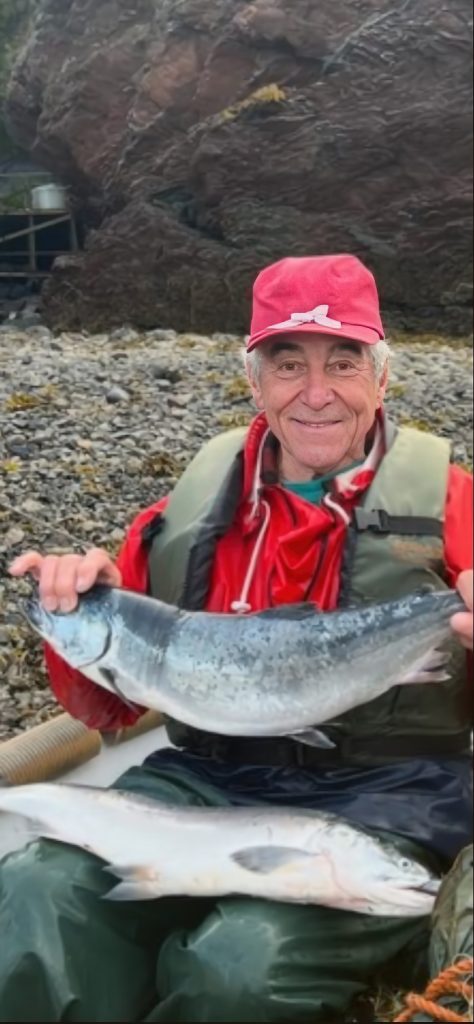
So, here we seek to honor them for the heaven-sent mystery they surely were.
We liked to imagine that perhaps the fish were the souls of the ancient people who had preceded us in that remote place—and asking to be remembered.
It was that place, and those ancient spirits, that propelled us to the other side of the world—to Timbavati to Alaska’s Antipodes.
Our lives would be forever changed by those flashing salmon—and next by the about to be internationally famous, African white lions.
- add citation [↩]