Stories of Alaska’s Kamishak Bay
A Litany of Despair
Three Rivers of Alaskan Gold
—Only Three Returned
“It is often vital to ask questions for which there is, for which no answers are available, otherwise we missed something important about the human condition.”
—Carl Sagen1
“When faced with impulsive opportunity, clarity may come from considering opposites.”
—Michael McBride.
FOR THE RAFT MEN, it was life or death.
I was gilled—caught in the salmon web—by the alluring, little-known territory of Kamishak Bay. It lay just 130 ocean miles west of my home in Kachemak Bay when I first heard its call in 1966. By the time I was fishing set-nets a decade later in Tuxedni Bay, I knew I’d been caught as surely as any red salmon.
This overlooked place, 150 miles southwest of Anchorage, was to me more than a destination. That silver salmon run we harvested felt like our gold rush.
Even the names—Kachemak, Kamishak—echo like a Kipling riddle. They speak of the First Peoples whose homelands, layered in time and tide, would become ours too.
We became the first white family to live year-round in Kachemak Bay’s ancient village site in 1969. Then, westward again to Kamishak, to the near-hidden Chenik Lagoon. We would spend 23 summers there on yet another ancestral site—spellbound, as many before us had been.
From our log cabin in Kachemak Bay, watching the western sunset flame across the sea, I could feel a pulse of fire reach across the waves from Kamishak—its coves, its bays, its frothing estuaries and bare-shouldered mountains. I saw them with my imagination long before I reached them with my boots.
And when the clouds were kind, I did see the crowns: Mount Douglas and his Four Peaked Pinnacles, Augustine Volcano in the mid-ground, and the first great northern stretch of the Alaska Range rising to Iliamna and on toward Denali.
The full arc of volcano, sea, and wilderness whispered: Come.
Chenik’s shoreline held frothing breath and oxygen-rich waves. Sea otters, harlequin ducks, pigeon guillemots, black-legged kittiwakes, and their cousins bathed and dove among the kelp. That kinetic, ever-churned surf—so rarely still—nurtured all life within it.
We were newly married then, with little to our name except a will to make it work. Our log cabin was abandoned and half-finished. No electricity, no road, no blueprint for success. Water was a walk to the spring or a scoop from the rain barrel.
A frozen cup of coffee greeted us in the morning if the fire had died overnight. Yet, even then, we laughed. We had traded a higher standard of living for what we hoped would be a higher quality of life.
Compared to the raft men—whom you’ll soon meet—we had ease and luxury.
From my windows I watched those distant Kamishak peaks, and in their glow, I could imagine alpine meadows so riotously colored, they rivaled Van Gogh’s palette.
In that moment, I knew I had found “good bottom with fine holding ground.” I was dropping anchor in a place I called The Port of Pleasant Weather.
I grew up half in Japan, half on the Chesapeake Bay. This wild land seemed the meeting point between those worlds—a place without symmetry, but rich in contrast. Japan’s refined traditions, music, dance, and poetry stood across time from Alaska’s raw spiritualities, its own dance, story, and war. Different, but no less profound.
As a boy, my mother gave me Don Quixote and said it was noble to dream the impossible. Then came South Pacific, and with it, Bali Hai— “Come to me, come to me,” sang the island.
That melody lodged somewhere deep. All these years later, I live where an isthmus floods twice daily—a thin land bridge connecting our roadless island to the mainland. We have always been a little apart, but not alone.
I raised my children here. With each tide, I stood suspended between dreams and landfall, and I watched the sunset blaze gold across the water beyond Kachemak, beyond Kamishak, beyond even the furthest ridge of my imagining.
My conversation with the last Dena‘ina speaker, Peter Kalifornsky, lit a small fire of hope.
“Peter,” I asked, “what does Kamishak mean?”
He smiled, mischievous:
“Dat means a good place to live.”2
His words became my lantern.
Native speech is often deliberate and poetic—reverent, not rushed. Theirs was a way of life in balance with the animals, waters, and spirits of this place for millennia.
Peter’s phrase gave me strength. If he believed Kamishak was a good place to live, perhaps we might find our footing too.
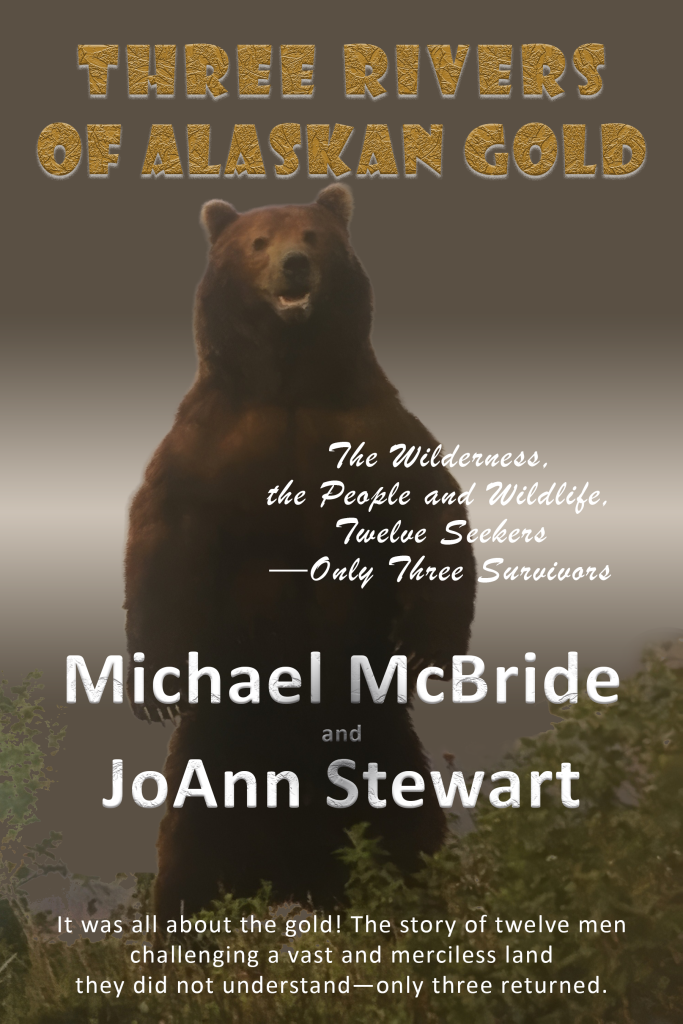
The raft men of 1922, who you are about to meet, must’ve carried some similar spark.3 Some raw belief that gold and glory lay westward.
They launched with hope. They were not so different from us.
We clung to our lives here like barnacles to basalt, enduring with stubborn, sea-glued tenacity.
Now, five decades on, I remain held fast drawn to this place as surely as a magnet to chainsaw filings, or tide to moon.
I never imagined that wind and chance would bring us to live beside that same western shore where those 12 men once landed—Chenik Lagoon, the place of endings and echoes.
Here begins their story:
Two rafts. Twelve men. Ten horses. Seven thousand pounds of gear lashed to a floating platform of surplus railroad timbers.
Their destination: Chenik. Their route: across Cook Inlet’s chaos—rips and currents shifting forty vertical feet in six hours, faster than a galloping horse.
A friend of mine, a commercial fisherman named Beaver Nelson, once said,
“There aren’t many Kamishak Bay stories—but the ones that exist are real doozies.”
This is one of them.
If any story deserves preservation, it’s this one—not just for the adventure, but for the lesson beneath it. A mirror, perhaps, held up to that oldest human impulse: to chase wealth and wander into danger with eyes half-closed.
But as with all epics, it begins where few expect:
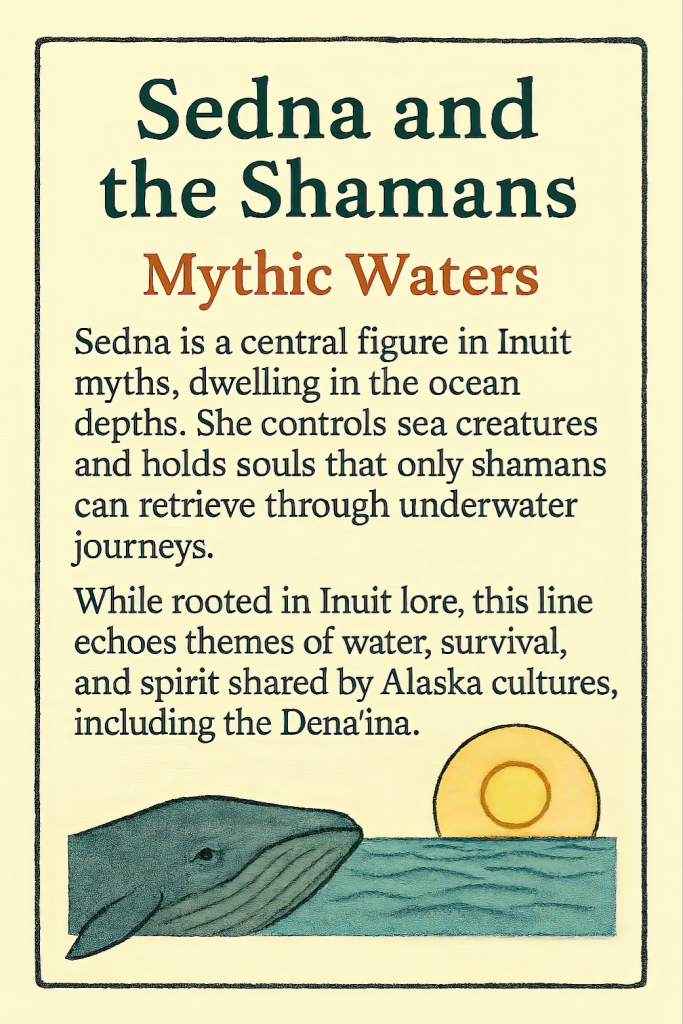
Underwater
In the dark domain of Sedna and the shamans.
Where dreams drift.
Where truths are caught in nets.
And where only some return.
- paraphrase from The Demon-Haunted World: Science as a Candle in the Dark [↩]
- Directly spoken to me, but also found in: Peter Kalifornsky’s legacy work—especially A Dena’ina Legacy – K’tl’egh’i Sukdu, edited by James Kari and Alan Boraas. [↩]
- Three Rivers of Alaskan Gold ©2025 Michael McBride and JoAnn Stewart [↩]