Into the Okavango Delta
by Michael McBride
Into that vast swamp with Chris and Robert McBride
In Botswana’s Okavango Delta—on foot and by mokoro
“Adventures are not always pony rides in May sunshine.”
—Thus spake Bilbo Baggins of Bag End
The Makgadikgadi Pans of Botswana lie along one of Africa’s great migration routes, teeming seasonally with wildebeest, zebra, waterbuck, and impala. Since Chris, Robert McBride, and I were there during the dry season, we also encountered oryx, eland, red hartebeest, and a countless flood of other animals.
The book referenced above was written by my cousin, the almost-famous author Chris McBride, distinguished yet humble soul, already known for The White Lions of Timbavati.
This nearly worthwhile fellow invited me to join him in Botswana’s Okavango Delta while he was still working on his second book, Liontide. Timidly stepping forward at the chance to return to Africa’s wild country with “my brother,” I offered to bring along my underwater Nikonos camera, my French cologne, and—for the sake of campfire decorum—my nightgown with lambswool slippers. We would see if there was any potential for an instructive underwater photo to add to the book’s questionable authority.
I did bring the camera. I even managed several shots that felt worthy of publication. But upon leaving the country by commercial jet, I foolishly left my camera case—film still exposed—under the seat.
The moment I stepped off the plane, the mistake struck me like a blow. I raced to the gate agent and pleaded for help. It was the last time I saw any of that irreplaceable film.
As one of my heroes, Andrés Segovia, once wrote:
“Fate often likes to put impediments in the path of an artist’s career, perhaps with the wise purpose of testing him, so that he might ascend, without descending, the steep pathway to success.”1
Bittersweet words—but my only consolation.
Our watery highway was the Boro River system, just northeast of Chief’s Island.
The journey began in Alaska—at the antipodes of Maun. I descended the fifty-two steps from my remote, cliffside home to the high-tide shoreline. Hoisting my single Seda kayak from its cradle on the dock to my shoulder, I clipped on my life vest, sealed my cell phone in a ziplock, and paddled into the rushing tide.
Anchored just offshore sat the eighteen-foot Boston Whaler Outrage—secured in deep water, as always. With tidal shifts reaching up to twenty-four vertical feet in six hours, mooring at the dock is out of the question. Boats must anchor out, where they can rise and fall with the living sea.
The journey began with a thirty-minute drive across open ocean, hoping for calm seas. In rough weather, one doesn’t attempt the mooring at all—it’s safer to stay ashore, away from Neptune’s icy grip. When the southwesterly sea winds rage, launching becomes an hour-long battle against salt spray, the horizon dissolving into white mist.
The nearest boat harbor is in Homer, where—on gentler days—a vessel can rest at a floating dock. From there, a pickup truck carries travelers along one of the world’s longest natural sand spits to the airport a few miles away. But that road is a gamble when the winds rise, sending rocks and logs hurtling through the air. It was not uncommon to be stranded—either on the mainland or at the spit’s end—waiting for nature’s fury to pass.
Next stop: Johannesburg, where I joined my cousin Chris.
From there, we drove four and a half hours to Gaborone, the capital of Botswana, in a friend’s vehicle. Waiting for me was a bed and a glass of wine at the Ambassador’s home—hosted by Melissa Maino, daughter of “The Honorable” Ted, a Reagan appointee and longtime family acquaintance.
I fully expected Chris to sleep in the bushes well beyond the Ambassador’s gate, lest his tattered Harris Tweed introduce unwelcome crawlies into diplomatic quarters.
Arriving there, however, I was surprised to see men in camouflage uniforms with machine guns stationed on the rooftop. Knowing I’d soon be venturing far off-grid, the sight of armed guards stirred some apprehension.
No cause for worry, as it turned out—perhaps just standard State Department policy for safeguarding diplomats in Africa.
The following day, Maun was still six hours away—our route taking us through Francistown, renowned for its ability to tan entire elephant hides.
That final leg by vehicle meant crossing the Makgadikgadi Pans of the Kalahari—a land of relentless daytime heat and desolation. My backpack, packed with bare essentials and first aid, lacked one critical item: a broad-brimmed hat. We searched the few shops along dirt streets, nearly ready to abandon the hunt when—Eureka!—one was found.
Chris’ “kit,” meanwhile, consisted of whatever happened to be in his pockets at that moment—likely kudu biltong and a crumbling rusk.
Wherever water was available, I plunged my cotton treasure into it, then placed it back on my head, leaving a small pool within to trickle cool relief down into my sun-glassed eyes.
By this point, we still had no solid plan for crossing the intimidating Kalahari.
Enter James McBride—a fresh-from-Ireland character we met at a local bar and casino. His Gaelic brogue was thick, his humor even thicker—keeping us doubled over in laughter about his homeland, his mother, and his pals back home.
When James—the slot-machine repairman—heard of our destination, he latched onto the idea like a rat on a Cheeto. Without hesitation, he offered to be our chauffeur, neatly uniformed for the occasion.
We might have imagined a sturdy, time-tested Land Rover for this desert crossing. Instead, his car was barely bigger than a breadbox.
Three grown men and gear for the wild—two men too many. Running alongside seemed an unwise alternative, so we poured ourselves in, knees to chins.
We waited for midnight, then—with a full tank of gas—roared off into the star-filled African night.
I tingled with excitement. Chris slept like a stone. The third McBride—the “real McBride,” fresh from the old sod—had the wheel.
His foot was lead-heavy on the pedal, pushing us across barren wastes before dawn.
Several hours in, Chris and I were jolted awake by a bone-crunching impact—a zebra, flying into our right-side door at terrific speed.
Chris muttered something about a leopard stampeding the herd.
The collision sent us skidding to a dusty halt. The door never opened again.
No brass band welcomed our early-morning arrival in Maun, beside the usually dry Thamalakane riverbed.
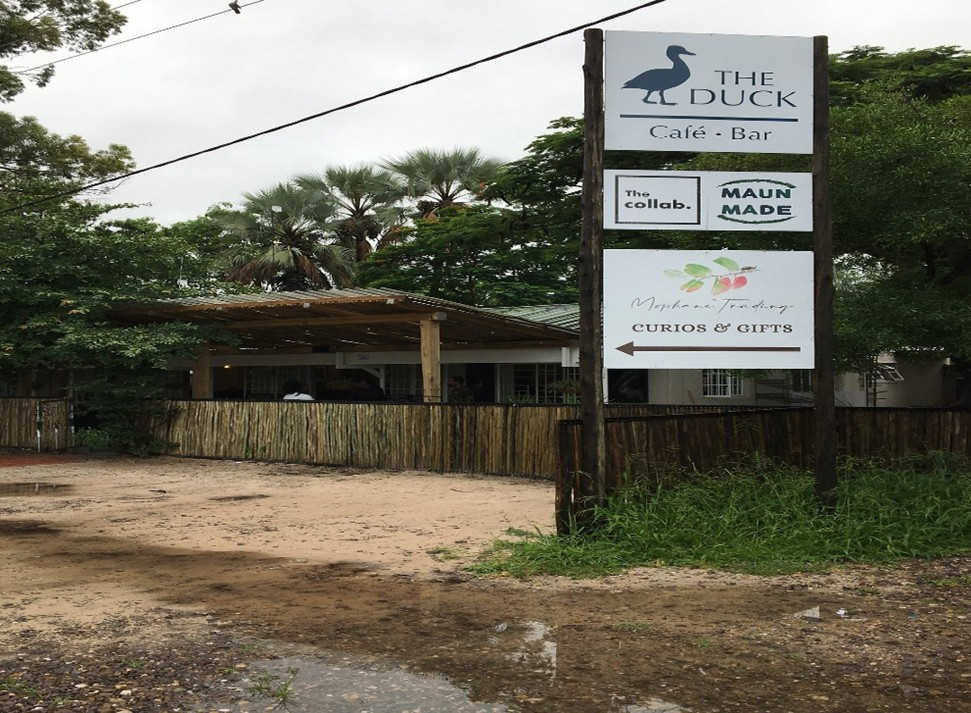
The Duck Inn was closed—so much for a scotch-and-water reward after the trauma of that desert crossing.
Waiting ahead lay the Boro N’yane River, flowing from the Okavango Delta.
It would be our gateway into the wet/dry wilderness—and as far as we knew, no one had ever done what we planned to do by mokoro.
We woke our Doctors Without Borders friend in Maun, rolling out our sleeping mats on his floor—not at all troubled by the cobra curled in the cold ashes of the fireplace. Or rather, we hoped it was sleeping. The flick of its tongue, sampling the air, suggested otherwise.
Yes, fireplace; yes, nights can be surprisingly cool in the Kalahari. And, yes, I was less than pleased with such an evil-eyed roommate.
Chris had graduated from Witwatersrand University in Johannesburg in 1965 with a degree in English and Zulu. Soon after, he ventured alone—guided only by his instincts and curiosity—into the depths of the Okavango, searching out what he described as the last of the San River Bushmen.
He found two traditional, Kiganima and Matturu, thought to have diverged from other humans one hundred thousand to two hundred thousand years ago—holding tight to traditions fading elsewhere.
Before leaving that first time, Chris loaned his double-barrel shotgun to a Swana friend, promising to return for it one day.
Now, here we were, returning and hoping and needing to recover the shotgun.
We found a guide, whom we nick-named “Gilly-Billy”, a Swana man whose real name defied our tongues—and hired him, along with his twenty-foot mokoro, a thin-hulled vessel hand-carved from the sausage tree (Kigelia Africana).
Before steel tools were available, locals shaped the boats by controlled burning, hollowing the tree’s core with fire.
Our mokoro was long, narrow, and impossibly streamlined, its bow and stern forming elegant points. Some of these handcrafted boats carried subtle, snake-like curves, depending on the tree’s natural bend and the skill of the builder.
The pole,balancing delicately upright,maneuvered with a long push-pole, its duckbill-shaped tip spreading as it pressed into the mud, then closing as the mokoro glided forward.
The art lies in finesse: push too hard, and retrieving the pole robs you of forward momentum. It is a rhythm,a conversation between force and surrender, yet another example of the opposites of the antipodes.
We launched into the world’s largest inland delta with precious few supplies; cornmeal, salt, oil, kudu biltong, and our greatest treasure: a pellet gun purchased in Maun for one hundred fifteen pula.With scant pula left—the Setswana word for “rain” and Botswana’s currency—we had gambled heavily on the gun.
A single lever stroke compressed enough air to send a tiny lead pellet fifty feet, enough to drop a green pigeon from the trees. We ate scores of them in the days ahead,each shot fired with careful restraint, not just for accuracy but for preserving our dwindling pellet supply.
Fishing hooks and twine allowed us to snare the ever-present catfish, though their taste was muddy and thick.
Ketlhatlogile Mosepele at the Botswana University writes of the nutritional richness of bream fish, which we found to be far more palatable.
Silver catfish(Lerehe in Setswana)—were easily caught, as were the three-spot tilapia, known locally as Mbweya.
With little money left, we sought to buy our own mokoro—a cheaper solution that would allow us to hire a guide independently.
We arrived at a tiny village on a too-small island, hoping to negotiate.
Following tradition, we were brought to the chief—a wiry man seated before his crude shelter. One of his wives appeared with bowls of fish stew.
The stew had more sharp bones than meat, but we slurped loudly, mimicking the chief’s own eating style, eager to show respect.
I tried not to stare at one of his wives, though my attempts were in vain.
She, like the other women, was stark naked save for a small leather modesty belt.
Her sign of relative wealth was far more memorable—a bright pink knitted jersey, worn to near ruin. Through well-worn holes, protruded two of the most pointed, erectile breasts the gods had ever shaped.
Had she been handed two balloons, she might well have clasped her hands behind her back and popped them both with a single stab.
The chief had two bowls before him—one for fish bones, one for eating.
From time to time, his young son emptied the bone bowl into his own, re-sucking the scraps that had already been consumed once before.
Such was the scarcity of food among these thin, wiry people.
That full-moon night, drums echoed across the delta.
Somewhere, the solitary crocodile specialist—the one we had met earlier—was out there, searching for hidden nests among the reeds.
In the distance, basso drumbeats reverberated, mimicking the heartbeat of Africa itself.
Freud would have smiled, I thought.
Through it all, Chris was quietly, profoundly joyous returning to the place that had captured his soul as a young man, after university.
I hiked daily with Horoletswe from Kiganima’s camp to the felled tree and wrote writing for hours as he hacked endlessly until his calloused, dry and deeply cracked hands bled.
Those familiar with this glorious place in Botswana hesitate to call it the Okavango Swamp, though in certain wet-season moments, the name might feel justified.
But for those of us who have been seduced by her gin-clear waters, her scrappy fish, her sweet-fruited marula trees, and her star-drenched nights, she qualifies as Eden itself—where one might, indeed, be tempted to lie down beside her still waters.
Yet the imagined lion and lamb do not lie together here.
For this place has spent the last ten million unglaciated years shaping itself into a state of flawless equilibrium, where the veil between prey and predator is as diaphanous as a silk scarf.
There is no wasted motion, no excess. Everything, everything, occupies a place that has been worked out since time out of mind.
Chris McBride—my old friend with the shared surname, if not shared genes—was nodding off, lulled by the breeze noodling along the slow-moving stream.
We had wandered into this remote, unknown place, calling to mind the old admonition:
“Don’t let being lost spoil the fun of not knowing where you are.” —Anonymous
Chris stirred, half-awake, wrapped in the languor of the Tropic of Capricorn, where man, lion, kudu, and impala alike call a ceasefire beneath the marula’s shade—escaping the blistering heat of a Capricorn sun.
The night before, lions had roared—their leaf-shaking vibrations trailing off with that unmistakable rhythm:
Huuuumm … huuuuummm … huuuummmm.
Chris could explain those vocalizations in full.
Full belly. Empty belly.
I’m here with my harem.
I will hunt tonight.
You young interlopers, hang back.
Then, suddenly—his voice sharpened with urgency.
“Even if an ant crawls across your nose, don’t move.”
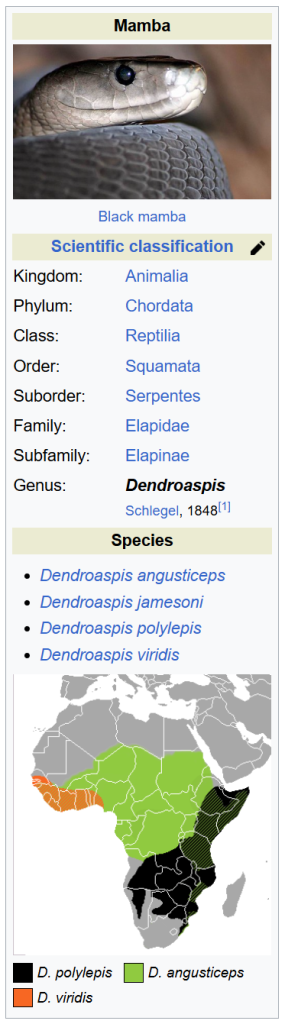
“There is a huge black mamba less than an arm’s reach behind your head.”
“One move, and you are a dead man.”
I couldn’t see it. But I was acutely aware of my situation and I froze.
Just be patient, I told myself.
Try to wait calmly.
And as I sat—stone still, not breathing more than necessary—my mind filled with the story of a young man who had died near Timbavati Dong-Dasha.
He had gone to the wood box for firewood, reached in, and—like a flash of fire—was bitten.
He was on his way to the clouds before his mind had even fully grasped the moment.
- First, loss of control—tongue and jaw heavy.
- Then, slurred speech. Blurred vision.
- Tunnel vision.
- Drowsiness. Paralysis.
- Nausea. Cough. Sweating. Dizziness.
- Hemorrhage.
- And a taste of death itself.
It can take seven to fifteen hours for a black mamba bite to kill a man.
According to National Geographic, venomous snakes kill an estimated thirty thousand people annually in sub-Saharan Africa—though experts believe the number could be much higher, as many deaths in rural areas go unreported.
Newsweek places the figure between twenty thousand and thirty-two thousand fatalities a year.
Staggering numbers.
Numbers that, in this moment, felt very personal.
Before this next adventure, back in Timbavati, Chris had played Beethoven’s Fifth Symphony—his favorite music on earth—through speakers mounted on the little Land Rover, letting the sound roll out across the bush.
It was part of his method—an attempt to habituate the lions to his presence.
He would provide an impala or another offering, hoping to draw the lions in for observation, then follow them as they hunted.
Through this persistent study, he documented their dependency on Cape buffalo, a reliance that had once been doubted.
The next day, Gilly-Billy poled us further up the Boro River, with Chief’s Island on our left.
He and Chris spoke of the dangers of crossing open water on a cloudy day—and of the serious threat posed by the hippos.
Territorial, furious, and unpredictable, hippos will overturn a mokoro without hesitation—killing all aboard.
My personal observation at T’sau l’gwana—pronounced with the click sounds of the Bushmen—was something I had never read in any report.
Deep in the Okavango, we poled past a place where there had once been a cluster of huts.
Like an echo of Karen Blixen’s words in Out of Africa:
“Once, there was a village here.”2
Our guide, push-pole in hand, explained to Chris:
The head man had been killed by a hippo, right in front of his family.
In terror of the spirits, the people burned all they owned and abandoned their home.
We could still see the burnt earth, the twisted blackened metal trunk—likely their most precious possession, used to keep their food safe from hyenas.
They even left behind a beautiful stone adz.
I had not seen a single stone on our wide-ranging travels, and I could only assume this fine artifact had come from a great distance.
The name for the place, Carry My Child, spoke to the ever-present spirits of the land.
The story carried a warning—woven into the very fabric of life here:
A mother, needing to water her mealie-corn stalks, asks the zebra to carry her child while she is gone.
The zebra tires of the duty.
The hyena, sensing opportunity, offers to care for the child.
Then promptly devours it.
In Africa, hippos kill more people than any other animal, followed by crocodiles and then snakes.Hippos are estimated to kill around five hundred people annually—but fatalities are likely underreported, meaning the real number is far higher.
They are, without doubt, the world’s deadliest large land mammal—charging, capsizing boats, crushing human bodies with their immense, sharp-edged teeth.
We stuck to the narrow hip-wide trails, cut through the dense papyrus thickets by crocs and hippos themselves.
Overhead, only a tall giraffe might peer above the towering reeds.
Thus, we had no real sense of direction—no clear landmarks—in this search for Kiganima and Matturu.
Only the ancient waterways.
Only the unseen hands of fate, guiding forward.
Finding them days later, mm has (hard copy?) photos of the VE 24 next to their simple brush shelter.
At one point, unknowingly, we passed a small side channel, where a crocodile had parked itself for a midday nap.
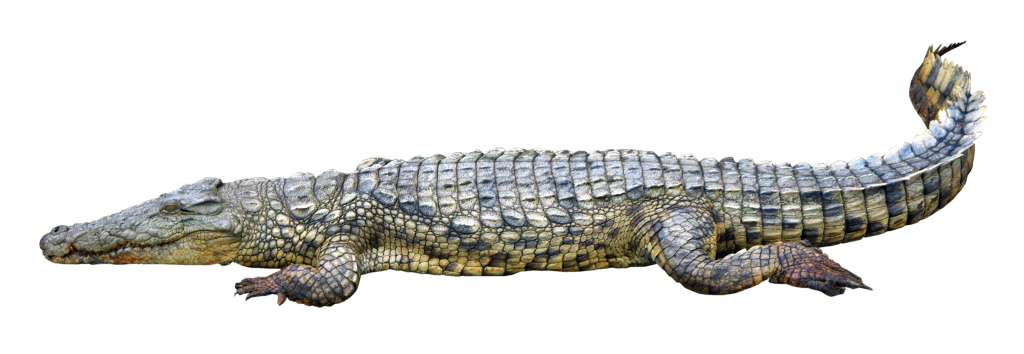
The creature, disturbed and territorial, voiced its displeasure—a sound torn straight from a nightmare, rising from just a few feet away.
Crocodiles are the most vocal of reptiles, capable of bellows, growls, and hisses.
This ancient relic of Pangea, barely changed since the Triassic period, has been around for one hundred million years—perhaps its unchanging existence is the reason for its perpetual boredom and grumpiness.
Each year, hundreds of people are estimated to die from crocodile attacks in Africa—though, as with most fatal encounters, the true number is likely much higher.
Enough of that grim thought, I prayed, imagining a rosary in my fingers.
We pushed on, searching for solid ground—a small island, preferably one crowned by a strangler fig, where we could make camp.
By now, Chris had reclaimed his shotgun, and as we rounded a leafy little island, he quickly fired at a sitatunga (Tragelaphus spekii)—a marsh-dwelling antelope, standing knee-deep in its usual habitat.
Wounded, it weakened, and we closed in.
From the bow of the mokoro, armed with a seven-inch Buck knife, I lunged—grabbing the animal’s left horn—and with a single, lucky stroke, stabbed between the atlas and axis vertebra at the base of its skull.
The kill was instant.
We butchered the animal, making camp on that tiny island, and ate from the hindquarters forward—consuming the most perishable cuts first, before the heat summoned maggots.
A twenty-four-hour smudge fire kept the remainder smoking into biltong jerky, preserving it for the long days ahead.
That full sitatunga belly, with the moon and stars above, sent me into a deep sleep.
Until I was awakened—thrown into a hideous nightmare.
Something—an insect, a parasite—was inside my ear, burrowing inward, searching for an exit through my brain.
For a time in college, I was a pre-med student, taking a course in parasitology.
You do not want to travel alone in Africa if you have taken such a class.
Panicked, I considered assisted suicide, hoping not to waste a shotgun shell.
Chris, unruffled, suggested a simpler remedy:
He placed a drop of vegetable oil into my ear.
The damned thing drowned.
Its remains, I assume, are still lodged somewhere—perhaps the reason my earwax carries an unpleasant scent.
Chris was unwell, his residential malaria reawakening, the blood parasites attacking again.
Even after treatment, malaria can persist for years—its Plasmodium species lying dormant in the liver, triggering relapses.
Its effects can be long-term, leading to neurological problems, cognitive impairment, motor dysfunction, even seizures.
As he slept, I decided—perhaps foolishly—to venture alone on a Chief’s Island hike, without Chris, and more critically, without his .416 rifle to protect me.
My mind buzzed with fears—but I chose to press forward, treating it as a test.
Upon returning, I described to Chris a sound I had heard—a hideous growl, something that nearly killed me from sheer fright.
I imitated the noise, trembling still.
Chris burst into laughter.
“That was an ostrich, Alaska man!”
Wandering alone, I stumbled upon something extraordinary:
Beneath a large marula tree, a giant wooden sculpture—a penis and testicles, crafted into a bellows for smelting iron.
I was instinctively afraid—the place felt like a sacrilege, a site where no white man should trespass.
Throughout history, forgers were high-ranking Sanusi mystics, their work filled with ritual and alchemy.
Near the ancient bellows, I found pieces of slag—stony waste matter, separated from liquid metals in the refining process.
Such heat requires fast-moving air, forced into the flames through a powerful bellows—one not easily crafted.
The Zulu forged at least twenty types of spears, the most famous being the assegai, used across Southern Africa—a throwing spear, its narrow leaf-shaped blade designed for flight and impact.
The bellows itself was astonishing—its shaft measuring three and a half feet long, roughly ten to twelve inches in circumference.
Carved from a single piece of wood, it was hollow, smooth inside and out.
At the base, two rounded testicles, their surfaces stretched loosely with animal hidperhaps porcupine, though I guessed impala.
At the tip, a small aperture—through which air was expelled into the fire, mimicking the act of creation itself.
By manipulating tension, the forge master could accelerate the air, deepening the flames, seeking the searing heat required for metalwork.
Across centuries, forgers and alchemists alike have searched for the Philosopher’s Stone—a substance to transmute lead into gold, to hold the secret to immortality.
In Western myth, Thor of Scandinavian legend wielded lightning to forge ancient swords.
His hammer, Mjollnir, represented thunder, the force of creation through fire.
Africa, too, has its sacred metallurgy.
And though the distance between Scandinavia and Timbavati is vast, the art of fire and metal—the act of forging transformation—remains universal.
I Remember
We hitchhiked out of Maun in a wheeled Cessna 206, lifting off into the African sky, leaving the delta behind.
At the Namibian border at Hanse, we faced uniformed guards, machine guns slung across their shoulders, their expressions unreadable.
We had no certainty of passage, but we had a fat bag of oranges—a bribe, or perhaps just a gesture of goodwill.
With jovial interaction, our passports were stamped, and we were sent on our way—flying at treetop level, because below us, the war raged on.
Bullets flew beneath us, and rumor had it that Cuba had sent twenty thousand mercenaries, engaged in the fight for control of the country.
Landing in Windhoek, we were reminded again of our precarious position.
We passed through scowling faces, camouflage uniforms, machine guns pointed at us.
We avoided eye contact, the way one does when passing a snarling pit bull—submissive, downward gaze, long, slow exhalations, moving forward without hesitation, without challenge.
Africa had left its mark on us.
The zebra, colliding with our car as it fled a lion’s pursuit.
The herd of impala, leaping over our sleeping-bag bodies, plunging into the Umfolozi River, where crocodiles waited, mouths open.
The live-trapped leopard, caught in a baboon cage in the dark.
The black mamba, poised behind my head, waiting.
The pygmy goose, drifting in the Du-O pool.
The parasite, burrowing into my ear, seeking my brain.
The sitatunga, killed with a Buck knife, eaten in its entirety.
The old man, dying fireside, struck by a night adder.
The mating adders, coiled in the dark, unseen until I had stepped over them.
Horuletsue, carving a mokoro.
Maturu, with her small band of river Bushmen, telling us that Kiganima was dead.
Carry My Child—T’sau-n’gwana, the burned-out camp, where the hippo had killed the man.
And so much more.
We had entered the Okavango Delta, and it had entered us.
Some places never leave you untouched.
Image Credits
Image: Black mamba taxonomy chart
Source: Wikipedia
By Hendrik van den Berg, CC BY 3.0, https://commons.wikimedia.org/w/index.php?curid=47439580
Image: Deadly crocodile
Source: Pixabay
Image by Jean photosstock from Pixabay