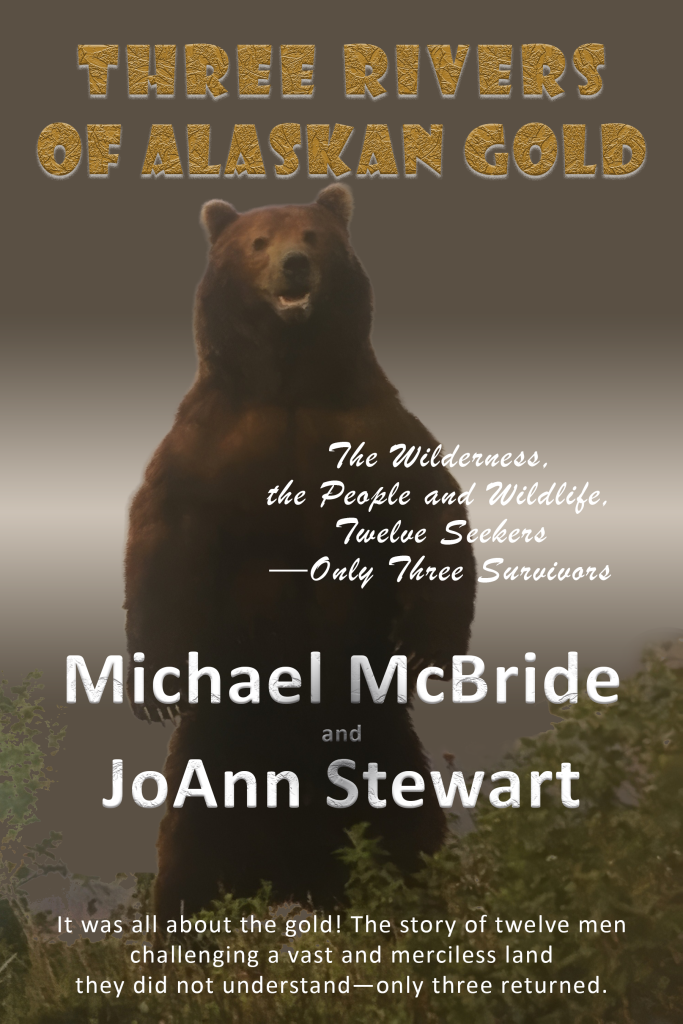
A Litany of Despair Three Rivers of Alaskan Gold —Only Three Returned
“It is often vital to ask questions for which there is, for which no answers are available, otherwise we missed something important about the human condition.” —Carl Sagen1
“When faced with impulsive opportunity, clarity may come from considering opposites.” —Michael McBride.
FOR THE RAFT MEN, it was life or death. I was gilled—caught in the salmon web—by the alluring, little-known territory of Kamishak Bay. It lay just 130 ocean miles west of my home in Kachemak Bay when I first heard its call in 1966. By the time I was fishing set-nets a decade later in Tuxedni Bay, I knew I’d been caught as surely as any red salmon. This overlooked place, 150 miles southwest of Anchorage, was to me more than a destination. That silver salmon run we harvested felt like our gold rush. Even the names—Kachemak, Kamishak—echo like a Kipling riddle. They speak of the First Peoples whose homelands, layered in time and tide, would become ours too. We became the first white family to live year-round in Kachemak Bay’s ancient village site in 1969. Then, westward again to Kamishak, to the near-hidden Chenik Lagoon. We would spend 23 summers there on yet another ancestral site—spellbound, as many before us had been. From our log cabin in Kachemak Bay, watching the western sunset flame across the sea, I could feel a pulse of fire reach across the waves from Kamishak—its coves, its bays, its frothing estuaries and bare-shouldered mountains. I saw them with my imagination long before I reached them with my boots. And when the clouds were kind, I did see the crowns: Mount Douglas and his Four Peaked Pinnacles, Augustine Volcano in the mid-ground, and the first great northern stretch of the Alaska Range rising to Iliamna and on toward Denali. The full arc of volcano, sea, and wilderness whispered: Come. Chenik’s shoreline held frothing breath and oxygen-rich waves. Sea otters, harlequin ducks, pigeon guillemots, black-legged kittiwakes, and their cousins bathed and dove among the kelp. That kinetic, ever-churned surf—so rarely still—nurtured all life within it. We were newly married then, with little to our name except a will to make it work. Our log cabin was abandoned and half-finished. No electricity, no road, no blueprint for success. Water was a walk to the spring or a scoop from the rain barrel. A frozen cup of coffee greeted us in the morning if the fire had died overnight. Yet, even then, we laughed. We had traded a higher standard of living for what we hoped would be a higher quality of life. Compared to the raft men—whom you’ll soon meet—we had ease and luxury. From my windows I watched those distant Kamishak peaks, and in their glow, I could imagine alpine meadows so riotously colored, they rivaled Van Gogh’s palette. In that moment, I knew I had found “good bottom with fine holding ground.” I was dropping anchor in a place I called The Port of Pleasant Weather. I grew up half in Japan, half on the Chesapeake Bay. This wild land seemed the meeting point between those worlds—a place without symmetry, but rich in contrast. Japan’s refined traditions, music, dance, and poetry stood across time from Alaska’s raw spiritualities, its own dance, story, and war. Different, but no less profound. As a boy, my mother gave me Don Quixote and said it was noble to dream the impossible. Then came South Pacific, and with it, Bali Hai— “Come to me, come to me,” sang the island. That melody lodged somewhere deep. All these years later, I live where an isthmus floods twice daily—a thin land bridge connecting our roadless island to the mainland. We have always been a little apart, but not alone. I raised my children here. With each tide, I stood suspended between dreams and landfall, and I watched the sunset blaze gold across the water beyond Kachemak, beyond Kamishak, beyond even the furthest ridge of my imagining. My conversation with the last Dena‘ina speaker, Peter Kalifornsky, lit a small fire of hope. “Peter,” I asked, “what does Kamishak mean?” He smiled, mischievous:
His words became my lantern. Native speech is often deliberate and poetic—reverent, not rushed. Theirs was a way of life in balance with the animals, waters, and spirits of this place for millennia. Peter’s phrase gave me strength. If he believed Kamishak was a good place to live, perhaps we might find our footing too.
The raft men of 1922, who you are about to meet, must’ve carried some similar spark.3 Some raw belief that gold and glory lay westward. They launched with hope. They were not so different from us. We clung to our lives here like barnacles to basalt, enduring with stubborn, sea-glued tenacity. Now, five decades on, I remain held fast drawn to this place as surely as a magnet to chainsaw filings, or tide to moon. I never imagined that wind and chance would bring us to live beside that same western shore where those 12 men once landed—Chenik Lagoon, the place of endings and echoes. Here begins their story: Two rafts. Twelve men. Ten horses. Seven thousand pounds of gear lashed to a floating platform of surplus railroad timbers. Their destination: Chenik. Their route: across Cook Inlet’s chaos—rips and currents shifting forty vertical feet in six hours, faster than a galloping horse. A friend of mine, a commercial fisherman named Beaver Nelson, once said, “There aren’t many Kamishak Bay stories—but the ones that exist are real doozies.” This is one of them. If any story deserves preservation, it’s this one—not just for the adventure, but for the lesson beneath it. A mirror, perhaps, held up to that oldest human impulse: to chase wealth and wander into danger with eyes half-closed. But as with all epics, it begins where few expect:
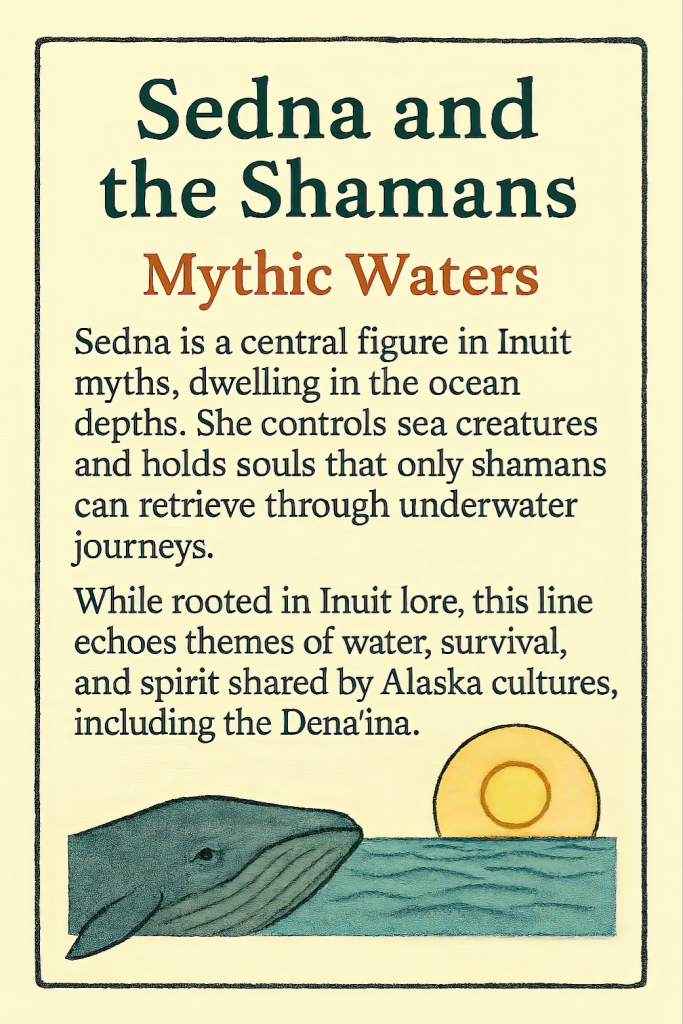
Underwater In the dark domain of Sedna and the shamans. Where dreams drift. Where truths are caught in nets. And where only some return.
paraphrase from The Demon-Haunted World: Science as a Candle in the Dark [↩]
Directly spoken to me, but also found in: Peter Kalifornsky’s legacy work—especially A Dena’ina Legacy – K’tl’egh’i Sukdu, edited by James Kari and Alan Boraas. [↩]
The force that breathes life into this story comes from a magical place, where land meets sea, and where the ancient people lived in harmony with the spirits of the land. In a season marked by the vagaries of sun and rain, a crop of black currants appeared—unlike any we had seen before. While the vines grow in scattered patches along the coastline of our bay, they flourish most abundantly atop archaeological sites that dot this south-facing shoreline. It is as if the berries draw sustenance from the accumulated remains, perhaps even the bones of those who lived here for thousands of years. Across this stretch of Alaska’s coast, countless archaeological sites exist—silent remnants of early inhabitants. Like us, those first residents chose their homes with careful consideration. In the circumpolar north, a southern exposure is vital—the difference between light and darkness, between endurance and hardship. Pity the person whose home is shrouded in shadow on December 21, the shortest day of the year. Even in this prime location, our winter solstice grants us only thirty minutes of direct sunlight—yet that fleeting golden glow transforms the mood of all who bask in its touch. A hundred paces east of the lodge, the footprint of a Native barabara—a semi-subterranean home—remains visible where I have cleared away the forest floor debris. When sharing this place with visitors, I kneel, push aside an imaginary heavy bear hide, and enter, crouching. Pointing toward the southern notch in the mountain, I explain:
“Even on the shortest day, the winter door could be thrown open, allowing a direct path of sunlight to reach the center of the home—the hearth, the heart of life.”
Middens: Layers of Time
The Eskimo, Aleut, Indian, and Sugpiak civilizations left behind piles of discarded shells, bones, and organic material just beyond the entrances to their homes. Archaeologists call these middens, yet to those who lived here, they were simply part of daily life—a testament to survival, ritual, and the rhythms of the land and sea. and the past reveals itself as history emerges beneath your feet: White clam shells, shining like the remembered flames of seal-oil lamps. Blue mussel shells, rich deep hues contrasting against urchin tests and bracken. Bones of local animals, mixed with fire-cracked rock, remnants of ancient cooking fires. And burials, too, must lie everywhere. Late winter, early spring—the season of starvation. Supplies dwindled, and unless the weather was kind and hunters skilled, survival was uncertain. The very old and very young perished first, and while their people sought to honor them, energy was scarce. In the deep freeze of winter, the ground was iron-hard. But within the middens, where decomposition warmed the earth, a shallow pit could be scraped—a place for a quiet resting place, where body and earth would intertwine once more. The chemical dance of decay—calcareous limes, ash, and the tannic soil—created a nurturing medium, an unexpected gift to the thriving berry vines. And so, in the whispering wind, among the currants born from centuries past, the land carries forward its ancient messengers.
Hunting, Gathering, and Food Preparation
For thousands of years, the survival of these Indigenous communities depended on their intimate understanding of seasonal cycles and the resources available to them. Their methods—shaped by skill, patience, and deep respect for nature—were passed down through generations, ensuring continuity between past and future hunters, gatherers, and caretakers of the land. The people of this region were exceptional hunters, navigating vast tundras and icy waters with precision and reverence. Hunting was never merely an act of taking—it was a relationship with the land and its creatures, guided by respect and necessity. Seals and whales provided essential fat, meat, and bones, their hunts requiring communal effort and coordination. Caribou migrations dictated seasonal movements, as families tracked herds and used well-established techniques for trapping and pursuit. Waterfowl and fish were gathered using woven nets, bone hooks, and clever strategies that took advantage of currents and nesting sites. The hunter was not simply seeking prey—he was waiting for the right animal to present itself, believing that success depended on being “right with the world.”
Gathering & Preparation
Equally important was the knowledge of plants, roots, and berries, which sustained families through the harshest winters. Black currants, cranberries, and wild blueberries were gathered with care, their arrival in late summer signaling an abundance that must be quickly preserved. Seaweed and edible roots supplemented diets with essential nutrients, often dried and stored for months of scarcity. Fire-cracked rocks in the middens reveal the presence of ancient cooking methods, where stones were heated and used to prepare meals. Cornelius Osgood’s 1932 Yale Press[1] work Ethnography of the De’Naina documents many of these traditional practices—recording how early Arctic societies preserved food, adapted to changing conditions, and balanced consumption with conservation. And so, woven into middens and burial sites, into the scattered bones of hunted animals, and into the black currants thriving above ancient fires, lies the unbroken thread of survival—a testament to resilience, adaptation, and the enduring relationship between people and the land.
Traces of the First Peoples
Radiocarbon dating of the oldest archaeological material in China Poot Bay reveals a profound truth—people lived here long before the pyramids of Cheops rose in Cairo, before even the earlier step pyramids took shape. Yet, without written records, we do not know what these ancient ones called themselves. We refer to them as the people of the Arctic Small Tool Tradition—a name given to those whose presence across the far north shaped the early lifeways of this land.
The passage of time is difficult to grasp in its fullest measure.
The stories of Christ, Buddha, Confucius, Lao Tse, and Mohammed take us back just two thousand years. Six thousand years bring us to the dawn of civilization, when writing first emerged in the Fertile Crescent, across the Tigris and Euphrates in lands now known as Persia, Afghanistan, Iraq, and Iran. But here, along the rugged Alaskan coast, the past endures in a different way—woven into the land itself, carried forward by the quiet persistence of nature.The first people arrived tens of thousands of years ago, migrating across the Bering Land Bridge, a vast, now-submerged corridor connecting Asia to North America. These early travelers, bound by necessity and curiosity, followed ice-age landscapes, navigating coastal routes and inland pathways where resources sustained their existence. Over centuries, these communities became masters of the North, shaping their world through keen observation, deep reverence for nature, and unmatched survival skills. They understood the tides, the winds, and the language of the animals. Their settlements—now buried beneath layers of earth—tell of their knowledge, their movement, their ability to adapt. The Arctic Small Tool Tradition, spanning from Siberia through Alaska and into Canada and Greenland, brought sophisticated methods of toolmaking, hunting, and community building. These traditions, passed through countless generations, formed the foundation of modern Indigenous cultures still deeply tied to this land. And so, while time moves forward, the stories remain—etched into the bones of the earth, whispered through the black currants that thrive above ancient burial sites, reminding us that the past is never truly gone.
Echoes in the Land
Among the many signs of ancient presence, none speak louder than the black currants. The berries thrive upon archaeological sites, their vines stretching across burial grounds, middens, and long-forgotten hearths. It is as if they are nourished by the spirits who once lived here. The skins of the fruit are so dark, they seem to draw the ebony tarnish from the remains of long-extinguished fires. With each season, the berries bloom from the soil as blossoms in spring, only to fall back into shadow in their time. I believe that every square inch of China Poot Bay has witnessed the fullness of life—birth, death, joy and sorrow, celebration and grief. The passage of this time is staggering. The stories of Christ, Buddha, Confucius, Lao Tse, and Mohammed take us back about 2,000 years. But 6,000 years ago—that’s the dawn of civilization as we know it. Dances were performed for wide-eyed children while stories stretched long into the star-filled nights, the storm surf booming on adjacent beaches. Battles raged here; war parties set forth. The great and the small lived here—some returned chanting in triumph, others moaning in defeat. Kayakers paddled into these quiet coves, paddles held erect, blades lifted in peace. Others ventured out into the waves, never to return, leaving wives and children to wonder at their provider’s fate. And somehow—the berries remember it all. For those who pause to listen, kneeling low enough to breathe the damp air rising from the soil, the past is still alive.
The Language of the Ancient Ones
To the ancient people, the world was not divided between human, animal, and plant—it was all interwoven, all alive. Stones in sacred places were given offerings, treated as if they had souls. Trees had voices, carrying good or bad tidings. Successful hunters became the animals they pursued, mimicking their calls with near-perfect accuracy. We are told that, long ago, animals and people spoke the same language. A hunter did not simply seek prey—he ventured forth to see which animals were willing to present themselves. If he was “right” with the world, he would find success. This understanding, this bond, is woven deep into the land.
The Communion of the Berries
In Christian tradition, the bread and wine of communion are believed to embody or symbolize the body and blood of Christ. Is it such a stretch to believe that these berries are a part of the body and blood of the people? The scented stems reach for the sun. The roots probe deep into the soil, drawing nourishment from the bones of those ceremonially laid to rest or fallen here. The skins of the purple fruit are so dark, you might imagine they draw their ebony hue from the remains of ancient fires. The berries rise from the soil as blossoms in spring, then drop back into the shadows from whence they came. Each summer, at berry-picking time, one kneels to uncover their hidden clusters. It is a reverent act, turning back the leaves and stems, revealing the secret places where the berries wait. I sink low into the shadows, among the devil’s club and spreading ferns, searching them out. Last fall, as I harvested from a massive vine curling around a giant stump, the land offered up more than five pounds of fruit—a treasure left for me to find. Nearby, a stubby-tailed winter wren (Troglodytes troglodytes) paused, questioning me in her own way:
“What business do you have in my dominion?”
I assured her I would leave plenty for her and her kin. She spoke. I spoke. We understood each other. Neither of us was surprised.
What the Land Can Teach Us
Consider this—millions of people have walked this earth, yet for thousands of years, those who lived here left virtually no mark upon the land. Modern humanity, however, in just a few hundred years, has already begun to reshape the planet itself. What lesson lies in this for Alaska’s recent colonists—those who have been here barely a lifetime? The Russian occupation began with Vitus Bering and Baranov in the late 1700s, lasting 125 years. America purchased Alaska in 1867, yet the United States only made Alaska a state in 1959—a mere 66 years ago. Our time here is short. We have only just exceeded the length of Russian occupation. How do we measure our impact against the millennia during which The First People lived in harmony with this land?
A Tribute to the Ancestors
She is now with her ancestors—the grandmother whose name was given to her. She was the one who set me bread, tea, and dried salmon, when she had little to give. She was the one who stitched skins for my family, who told me long stories of her ancestors “up Point Hope way.” To her, I repeat her own good words:
“If I ever didn’t do right by you folks, I am sorry. You folks been good to me; God been good to me; I don’t wanna have no grudge against God.”
And I recall the words of another Native friend—the beautiful Inupiat elder and traditional healer, Aght-gle-gaq.
The Living Room of Stories
My friend Yemegaq Slwooko shared an ancient story as we sat together on the floor of her home in Sivugaq, a village on the Bering Strait. Outside, a storm raged, shaking the house with its relentless insistence. Through the ice-skimmed window, the world beyond looked cold and unforgiving, yet inside, we were wrapped in warmth and tradition. Yemegaq sat straight-legged, skinning the white foxes her husband had trapped the day before—hands steady, movements practiced. Here, in this space, life was carried forward through ritual and skill—weaving nets, braiding grass baskets, preparing food—all done on the floor of the central room, what we might call a living room, though its true essence was something deeper. Among her people, such spaces were known as quasag—gathering places where, amid work, the ancient ways were passed down through stories. She glanced up as the storm howled outside, her voice steady and certain:
“In the culture of my ancestors, the greatest gifts we can give or receive are those without material form—songs, dances, and stories.”
Listening for Stories in the Wind
On the other side of the world, an imprisoned Han bushman of the Kalahari speaks of waiting—waiting for the moon to turn back, for the moment when he may once again hear the stories of his people.
“I am here in a great city, and I do not obtain stories. I listen, watching for a story I long to hear. I will turn my ears backward to the heels of my feet on which I wait—so that I may feel when a story is in the wind.”
Stories have always begun this way—whispered into existence, shaped by elders, strengthened by a full moon, surging tides, or the voice of a talking river. There may be lightning overhead, or the distant call of owls and lions, their voices carried by the night. A spruce or combretum fire may crackle, its incense thick and intoxicating. Somewhere beyond, wolves and lions speak, weaving their own untold tales. Yet stories need not unfold in such exotic landscapes to be magical. The greatest wilderness is often within one’s own heart, where the inner search for meaning becomes its own journey—an untraveled dominion waiting to be explored. Each of us steps forward as a first-time explorer, seeking understanding, using the resources we have to make the world a better place.
The Shape of Creation
A few days ago, I was invited into the Zion Canyon workplace of Greg Worthington, a gifted potter and teacher. He handed me a lump of clay, mirroring the one in his own hands. Together, we began to shape—rounding the expectant clay, smoothing its surface with patient turns. Greg motioned for me to place my foot beside his on the stool in front of the potter’s wheel. With deliberate precision, he used his kneecap as a form, gently but firmly smacking the clay against it. Smack, turn. Smack, turn. Smack, turn. I followed, trusting the rhythm, feeling the clay respond. Then, with only our hands, we shaped and lifted—raising the walls, deepening the base. Our focus turned to uniform thickness, coaxing the form into something recognizable—a small, crude bowl, not much larger than a cupped hand.
A Return to Play
In those moments, we were as free from care as children. The left brain quieted, yielding to the tactile senses—alive, alert, instinctive. The earthy scent of wet clay hung in the air, clean, grounding, heavy on our hands. A church-like stillness filled the room, where even the smallest movement felt deliberate. Motes of dust drifted in a crepuscular beam of sunlight slanting through the high studio window, inviting a lightness of approach, a freedom from desire and ambition. It was basic. Elemental. Primeval. A connection to something ancient—one of the first creative expressions known to humankind.
Listening for the Story
As I reflect on these images, I hope to remain as open and expectant as a child at play—to listen as the bushman listens for the wind, to appreciate the insubstantial, as the Eskimo honors the unseen. Because song, dance, and story hold greater value than we can know. Imagine now, your empty hand, reaching outward—cupped, waiting—as if to catch the miracle of water. I would be as bare as a sadhu in a cluttered Punjab alley, his only raiment the ash of charnel fires, his empty bowl his sole possession. To such a one, life itself is a mysterious blessing—so much so that anything placed in the bowl becomes rubies and pearls.
Gathering Stories Among the Berry Canes
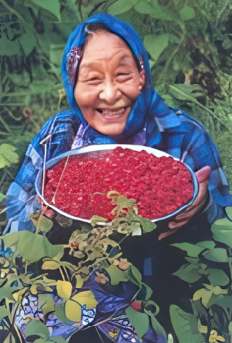
One day, as I knelt beside a beautiful elderly woman, gathering berries from the damp earth, I realized that this act was as sacred to her as receiving communion might be to a true believer. The berry canes surrounded us, creating a quiet refuge—even curious owls would struggle to see within. She told me a story from her ancestors, her voice steady, yet softened by memory. Perhaps this red bounty reminded her of girlhood days on the Arctic tundra, where life was light, where movement was free. Her spirit soared—transported, almost—but for the sticky sweetness clinging to her fingers, forcing her to pause, to lick them clean.
“T’is so much joy; t’is so much joy,” she whispered.
Aht Lee Chuck, the name of her grandmother.
A Tribute to Her Name
She is now with her ancestors, with the grandmother whose name was given to her. She was the one who once set me bread, tea, and dried salmon, even when she had little to give. She was the one who stitched skins for my family, who told me long stories of her people “up Point Hope way.” To her, I offer her own good words once more:
“If I ever didn’t do right by you folks, I am sorry. You folks been good to me; God been good to me; I don’t wanna have no grudge against God.”
A Life on the Tundra
She was raised “outa’ town,” far from settlements, where her father had been hired by the tribe to live year-round among the caribou. A harder life is difficult to imagine. She once told me of a time when her baby sister, still nursing, fell ill—”stopped up.” Her mother turned to her father, issuing simple, direct instructions:
“You go out there and kill a caribou, bring back that little bit of gut, and we will make the baby an enema. Put that piece under your arm so it don’t freeze.”
Few words. A glimpse into a world of raw survival, of resourcefulness, of deep-rooted wisdom. I am grateful I was able to save this piece of ancient lore—a quiet but profound echo from the past.
Guardians of Tradition
I recall the voice, the smile, the laughter of another friend—Aght-gle-gaq, a beautiful Inupiat elder and traditional healer. I remember the presence of Terry Rofkar, the celebrated Tlingit weaver of Raven Tail Blankets and master Basketmaker. Like their brothers and sisters, they carry the weight of preserving the traditions of their ancestors, ensuring that stories, skills, and heritage are not lost to time.
Native Influences and Legacy
The land remembers. Though centuries have passed, though the tides have swallowed footprints and time has buried voices, the legacy of the First Peoples remains woven into the very fabric of this place. It lingers in the rhythms of the wind, the tides, the growing seasons, in the unfolding patterns of survival that guided those who came before. Across the Arctic, from the high tundras to the forested coastlines, Indigenous knowledge shaped the land as much as the land shaped its people. The Arctic Small Tool Tradition, spanning thousands of years, gave rise to lifeways so intricately adapted to the harsh realities of the north that remnants of their wisdom endure—in hunting practices, food preparation, craftsmanship, and ecological stewardship.
The Art of Survival
The early inhabitants understood that survival was not merely about taking from the land—it was about balance, about knowing when to hunt, gather, and prepare, and when to give back. Their techniques, handed down through oral tradition, reflected an understanding that modern conservationists are only beginning to articulate—the land provides, but only when respected. Even today, echoes of this knowledge remain:
Subsistence hunting and fishing, where practices still mirror ancient traditions that emphasized only taking what is needed.
Traditional food preservation methods, like drying salmon, fermenting berries, and using natural ice caves for storage.
Navigation by environmental cues, where the grass, light, wind, and sea guided travel and survival.
The Unbroken Thread
Despite the disruptions of colonization, forced assimilation, and the encroachment of modern industry, Indigenous communities continue to preserve and pass down knowledge—ensuring that the thread of tradition remains unbroken. Though roads and technology now lace the landscape, though governments attempt to define and contain Indigenous sovereignty, the connection between land and people remains intact. And as the black currants rise each season from the soil—roots nourished by the ancient ones beneath—so too does the wisdom of those who lived before, carried forward by those who refuse to let it fade. Their influence is not a memory—it is a living presence, woven into the earth, the harvest, the sea, and the stories that refuse to be forgotten.
Terri Rofkar spirit keeper for her people her Lingít clan name, Cháas’ koowú tláa a member of the Raven Clan.
[1] The title of Cornelius Osgood’s 1932 Yale Press work is The Ethnography of the Great Bear Lake Indians.
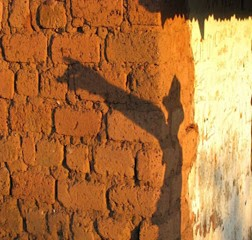
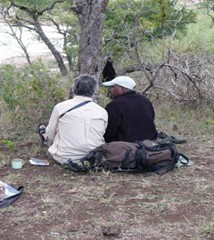
Laurens van der Post, Ian Player, Fyodor Dostoevsky, and many others have written about the profound role of the shadow in the human experience. C. A. Meier, in A Testament to the Wilderness, spoke to this mystery but without knowing the source of this photograph, my own shadow which came alive in remote Africa for him. In the image, the photographer stands on the right side of a crumbling, graffiti-scribbled wall, reaching around the corner to the other side—directing the viewer’s attention to a transparent, winged dragonfly. The photo was captured on film at a burned-out church at the Lusinga Ranger Station, deep in the rarely visited Congo wilderness. Opposites like this—what is real and what is not—figure centrally in my story. Alaska, my lifelong home. Africa, where part of my heart and soul have taken up residence decades ago. Few things are as compelling as comparing opposite, antipodean places on Earth—Alaska and Africa for example. As you join me in this story, you may need to loosen your belt a notch, this adventure has more than a little spice in its soup. Together, we can stretch to consider the multitude of opposites that always surround us: life and death, man and woman, night and day, sea and shore, near and far, joy and pain, sunshine where the shadow lives, and darkness that holds its own light. And of course, there is your own shadow—which is of coure you, but not quite you.
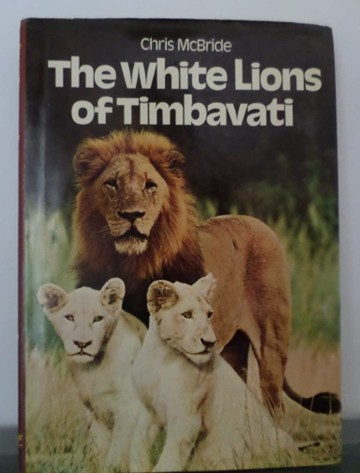
My role model, Laurens van der Post, wrote in The Seed and the Sower: “Mpumalanga is Timbavati—the remote place in Africa opposite Alaska. The name translates to “the River of Stars,” where people sometimes see white animals descended from the heavens, believed to be reincarnated Zulu kings”.
It is where the sun rises in Mpumalanga Province, South Africa. The word means East in Zulu—a direction, yes, but also a rich metaphor. A place of beginnings. Native Alaskan myths are not exempt from similar ancient stories. Important to this story are the McBride children of Timbavati—Tabby and Robbie, Morgan and Shannon. Each child grew up familiar with Beethoven’s Fifth Symphony, which begins with a distinctive four-note motif that recurs throughout the piece.
Beethoven described it as “Fate knocking at the door.” During the years that Chris and Charlotte were monitoring the behavior of the lions on his father’s very large land holding called Timbavati, they lured the lions which they needed to observe by baiting with the abundant impala which Chris shot, food for them as well as enticement for the musically oriented lions. They played their favorite music, Beethoven from speakers on the Land Rover and were thus able to follow them at night when the lions made surprising kills on Cape Buffalo in the dark, this was a little-known phenomena in animal behavior science and was an important observation. “One for the books” one could say.
A lioness and three rare white cubs once circled our little sleeping tent just outside the kraal of my Celtic cousin Chris and his wife Charlotte McBride, near a spruit of the Machaon River, close to Kruger Park. The camp sits on the banks of the Nhlaralumi River. In 1978, I was thirty-five. Diane was thirty-two. Shannon was seven. Morgan was five. Chris, Charlotte, and their children were of similar ages. Our lives were unalterably changed by those lions in the night.
“The spirit of the white lions still haunts the bushveld…Timbavati is a name so old that today’s inhabitants have forgotten its meaning. It is a landscape seemingly unchanged since our earliest ancestors roamed the earth.” —The Mystery of the White Lions—Children of the Sun God, Linda Tucker1
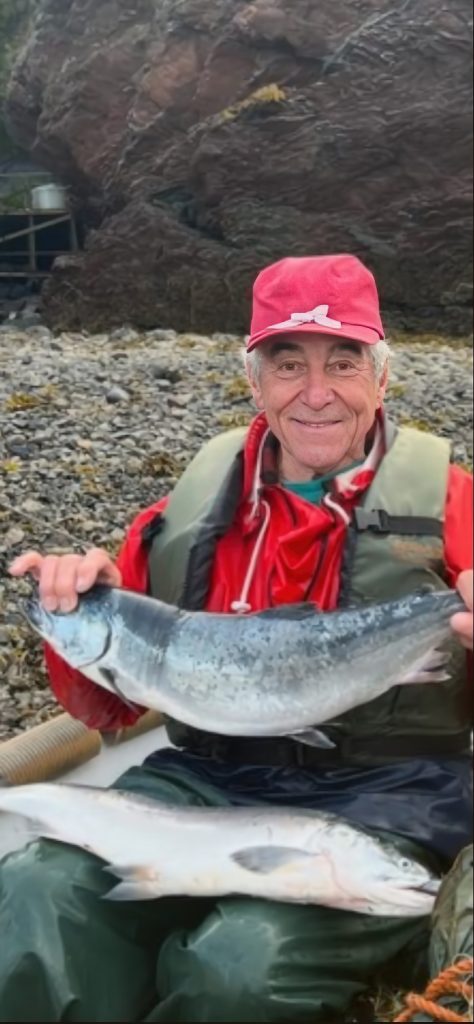
The catalyst for this antipodean journey—from Alaska to Africa—was a veritable river of Alaskan salmon that filled our remote commercial fishing nets in 1978 and extravagantly blessed us with more money than we could have imagined.
So, here we seek to honor them for the heaven-sent mystery they surely were. We liked to imagine that perhaps the fish were the souls of the ancient people who had preceded us in that remote place—and asking to be remembered. It was that place, and those ancient spirits, that propelled us to the other side of the world—to Timbavati to Alaska’s Antipodes. Our lives would be forever changed by those flashing salmon—and next by the about to be internationally famous, African white lions.
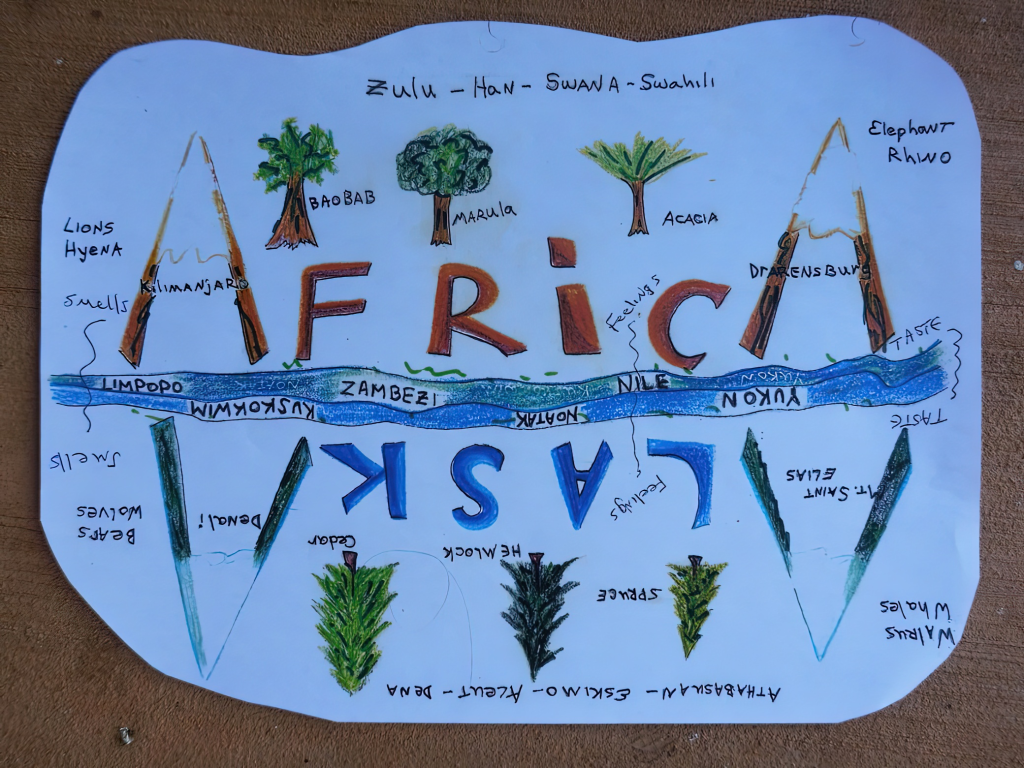
The Grand Antipodes: Africa and Alaska – Timeless Lands of Fire and Ice
Preface
Karen “Tanne” Dinesen, in Out of Africa, wrote in Danish, “I once had a farm in the Ngong Hills.” If the Alaskan Natives spoke of their cove at Chenik Lagoon in Kamishak, they might say, “There was once a village there.”
Lying beneath the spreading trees of Tanne’s farm just beyond Nairobi, I felt the depth of those words—not only in their meaning but in their essence. The air carried the scent of land long lived upon, and, in that moment, I knew it resonated with Alaska’s. At Chenik, the undulating salt-loving Elymus maritimus—beach rye that dances in the wind like the tide beside it—embodies the spirit of the land just as Africa’s grasses do. In both places, the interplay of scent, soil, and movement forms an identity, a heartbeat tethered to memory.
Opposites often share more than expected. In Alaska, I have felt the same profound connection as I did in Africa—that inexplicable sense of belonging to a land my heart recognizes as home. The stark differences fade, revealing something deeper: the emotional weight of place, the silent call of history beneath our feet.
The concept of opposites surrounds us—earth and sky, birth and death, samsara and nirvana, man and woman, sea and land. Even our own shadows reflect duality, ever-present yet never fully graspable. The Polynesians called the balance between past and future “ana pua-nana wale.” To stand firmly in one place, we must first reflect on where we have been and imagine what lies ahead.
Alaska and Africa—geographic opposites—are best understood with a globe in hand. Yet beyond mere distance, they exert a pull, like a magnet drawing in curiosity, intellect, and imagination. These places stir something elemental, their contrast more kinship than separation.
My home in the north stands where a village once did, and the breath of those who lived upon this soil lingers in the spruce-scented air. Their presence is felt, not only in memory but in something intangible—a whisper from the land itself.
Chenik, an ancient village site, became a haven for nearly twenty-five years, shaping us just as it was shaped by those before us. Like the Phoenix, our camp rose from the ashes of past fires, only to become part of that cycle once more. What remains are echoes—the shadows of stories, real as breath yet elusive as mist. Though these narratives may seem like fables, they are as true as time itself.
Dedication
With these stories, I seek to honor Herodotus, the great Greek historian and storyteller who serves as my mentor. His narrative style—woven with cultural insights and historical accounts—guides my approach to storytelling. Often called the “Father of History,” Herodotus was the first to apply a systematic method to the recording of historical events. Writing around 435 BC, he became a leading source of original historical knowledge, blending observation, inquiry, and vivid narration into a legacy.
Introduction to The Grand Antipodes
Opposites—whether in geography or within our own hearts—are often our greatest teachers, offering insight to those who look closely.
Were it not for a magnificent convergence of people and events, I would not be writing this. I owe a debt of gratitude to those giants who lifted me onto their shoulders, allowing me to see further down the path. To them,Idedicate this work, which is my earnest attempt to weave togetherstories that share the experiences and observations which shaped my journey.
This book is, at its core, a tribute to the insatiable wanderlust that carried me across oceans and continents, and to the countless individuals who inspired, guided, and challenged me along the way. From the Bering seacoast to the rugged Aleutian Islands, I ventured further and further westward until I reached the edge of the map the arbitrarily drawn international date line. Then, beyond that final boundary, I found myself standing in Chukotka, Siberia—without a passport yet warmly embraced by people I had been told were enemies.
This was but one of many moments that taught me to reconsider what I had been told and what I had assumed. It is opposites—be they distant lands, cultures, or ideas where the deepest connections often reside.
Where one finds the horizon, another may find their starting point. If I were to dig straight down, where might I emerge? Yes, into the antipodes, the other side of the world.
What I have set out to do is repay an overdue debt to honor the source that has given us a rich tapestry of experiences, woven together like the warm red and black stripes of a Hudson’s Bay blanket.
In the tradition of my Zulu friends, I wish to sing a praise song, a tribute to the land, the stories, and the connections that have shaped this journey. I want to sing it well, carefully enunciating each syllable, as ancient songs and stories were always repeated. I hope it brings both smiles and tears, stirring recognition in those who read it that they, too, have felt what I have felt. That there is camaraderie among all kindred spirits, a shared understanding that transcends borders.
Though the opening setting may be Alaska, the world at play here is far greater. A bountiful river of Africa runs through our Alaskan experiences, binding two lands that, though geographically opposite, share striking similarities.
Opposites, as it turns out, have more in common than we often realize. Just as our own shadows mirror us, so too do distant places reflect one another. This insight reminds us that the world is smaller than we imagined—that we are, in truth, one people.
The Alaska-Africa connection is a rich vein of treasure, first glimpsed as a glint in a mountain stream. We followed it upstream, and soon, it led us to the motherlode. We were given unspoken permission to mine it, and in return, we were gifted with something beyond measure—a veritable river of silver salmon, offering themselves to our nets, which in turn propelled us toward the other side of the earth.
It was a time when silver was gold silver salmon, that is.
These accounts serve as a tribute, a current flowing back to its source, honoring that which shaped, sustained, and allowed us to prosper.
In the Zulu court, there exists a role both sacred and deeply rooted in tradition—the m’bongi, meaning “thankfulness” or “gratitude”, is a singer of praise songs who was raised from birth to honor the Chief. These individuals are more than storytellers; they are the honored keepers of myths and legends, passing down histories through oral tradition from time immemorial. Their words do not simply recount—they uplift, integrating admiration, reverence and profound connection.
So too do I see my own role—weaving the ordinary into the sacred, binding experience with land and sea, air and animals. This is not new; it has been done across time and across cultures, from the first footsteps out of Africa to every corner of the world where stories are carried forward.
My praise song is sung for our ancestors, for the land that bore them, for the waters that sustained them, for the creatures that walked beside them, and for the diversity of people who continue to shape the world.
As the Zulu m’bongi honored their leaders, Robert Frost on the other side of the world in West Running Brook, honored the unseen forces that shape us—reminding us that a stream’s downward flow is its “tribute to its source”, just as we are tributes to what created us.
If Alaska is the final chapter of an ancient journey, then that journey began millions of years ago in Tanzania’s Olduvai Gorge, where Australopithecus—Lucy and her kin—first walked upright. Across the millennia, humans traveled ever further north, until at last, Alaska’s indigenous peoples arrived—crossing the Bering Land Bridge from the east. They would later encounter Europeans arriving from the west, converging in a land that feels, even now, like the farthest edge of the world.
Yet this story does not end where maps do. It carries us as far west as possible—even beyond passports and borders—continuing ever onward.
The beginning of my multi-cultural story has an Alaskan genesis, shaped by three distinct places—each bearing the weight of history far older than the Pyramids.
The Aleutians: Islands of the Four Mountains – A land of myth and mystery, where the ancient belief holds that “Chuginidak breathes through a woman.” This region remains one of the most remote and difficult places to access in the world, known only to the rare few who dare to tread its isolated terrain.
Nearby is Chulaka, The Oldest Occupied Village in Alaska – called Nikolski by the Russians, Chulaka has stood for millennia, dating back 5,000 years before the birth of Christ. From its shores, the silhouette of Anangula, Whale Swimming North, rises from the horizon—a small island believed to be inhabited by remnants of those earliest migrants who crossed the land bridge from Asia. The site, dating to 6400 BC, holds thousands of years of human presence, preserved beneath volcanic ash. Archaeologists like William Laughlin, professionally akin to Richard Leakey, excavated these layers, revealing a bedrock of history and the cornerstone of the ancient past: an estimated million razor-sharp lithic shards, remnants of centuries of sophisticated toolmaking.
The Bering Sea Coast – Northwest of Togiak, deep in the untouched coastal wilderness lies the final resting place of Apanvugpak, a warrior whose legend remains almost unspoken in history. Here, suicidal walrus, chased by grizzly bears, hurl themselves from towering cliffs—a testament to the raw, unforgiving nature of this place. In this vast expanse, where few ever tread, I wished to leave an offering at Apanvugpak’s gravesite and did so with gratitude. Perhaps no other living soul had done the same. I wanted to honor him and the generations of people who had walked these shores since time out of mind.
Interlude: Forgotten Landscapes
Even in the vast, untamed stretches of the world, there are places so remote that even those who dwell on their wild coasts do not know them.
Each of these stories stands as a tribute to the First Nations of this great land—a recognition of the deep histories, cultures, and lives that have shaped the terrain beneath our feet. They speak of places long inhabited yet scarcely known, where myths and legends live on, carried by the wind, whispered through the trees and through the long waving blades of the beach rye grass and embedded in the very soil itself.
We often believe we understand our world because we have mapped its boundaries and uncovered its secrets. But there are stories hidden in plain sight, waiting to be unearthed, their voices just beneath the surface, echoing across centuries.
These narratives remind us that discovery is not only about reaching distant horizons—it is about looking closer at what lies right before us. The richest stories are often the ones we never thought to seek.
A Life in Opposites
A lifelong fascination with remote, little-known, and unpopulated places has carried me across the globe—from the North Pole to Antarctica, Africa to Polynesia—pushing the boundaries of knowledge and possibility. These opposite corners of the earth have always held a particular fascination, both geographically and philosophically, reminding me that opposites are worth careful reflection.
In Antarctica, aboard the famous Lindblad Explorer as Expedition Leader, I experienced a moment of profound perspective. Captain Werner Volkersdorfer set me ashore in a Zodiac raft on the very beach where Shackleton and his men endured their ordeal before rescue. Shackleton left in search of help after four months, while others remained for ten months, surviving against all odds. Standing on that wave-washed gravel, I reflected on how far I was from my own home shore—on the other side of the planet yet I felt deeply connected to the place and those men.
Connecting with individuals in remote places creates a magic connection to those places. My global curiosity allowed me to have I friendships and ties in Polynesia, where I’ve been privileged to cross paths with remarkable individuals: Bengt Danielson, crewman on Thor Heyerdahl’s Kon Tiki raft, Dennis Akaka, crewmember on the maiden voyage of Hokulea alongside Nainoa Thompson and David and Dr. Mimi George, champions of Polynesian celestial navigation.
Yet another remote place led me to the Congo, where I worked alongside Franz Shimek and the Frankfurt Zoological Society under the United Nations, helping craft a Master Plan to restore Kundelungu and Upemba National Parks—lands nearly half the size of Switzerland. This work was as far-flung as one could imagine from my conservation efforts in Kachemak Bay, Alaska, and proved that opportunities for environmental protection knows no borders.
Flying the Alaska Bush with David Brower, the legendary founder of the Sierra Club, on his 80th birthday, was a world away from flying the African Bush with fellow game-ranger colleagues to protect the iSimangaliso Wetlands—which later became a UNESCO World Heritage Site. The Kalahari-Okavango designation, the 1,000th such site, became an enduring success thanks to the tireless efforts of Carol Ross, The Wilderness Foundation where I have been a Board member for decades, and “Bateleurs, volunteer Pilots flying for Conservation in Africa” where I was co-founder.
Another striking contrast emerged in environmental activism, under my mantra of working locally while thinking globally:
My family hosted Robert Rubin at my home in the wilderness during his tenure as Secretary of the Treasury under President Clinton, hosting Ian Player of Mpumalanga, Africa, co-founder of the Wilderness Foundation, alongside Magqubu Ntombela and working with Tebogo Skwambane, on the African Parks Board. Only to later be elected as the first Alaskan to the Smithsonian’s National Board—two wildly different antipodean localities, but with deeply intertwined purpose.
Each of these experiences sharpened my perspective, giving me both the confidence and conviction to testify before Congress and advocate for conservation worldwide.
Perhaps the river running through these opposite experiences was a quirk of ancestry, an inheritance from unknown forebears who, like Herodotus, understood the power of storytelling—the ability to inspire a sense of wonder for this vast blue and green planet.
If stories can help us better understand the diversity and complexity of life, they may also guide us toward peace—toward a stronger commitment to protecting each other and the world we depend upon.
Balancing this duality has become essential in the Anthropocene. In an era where the fragility of the environment is undeniable, we can no longer afford to ignore the sustainability of our own existence.
Unlike past generations, we have come to realize that the way we are living is no longer sustainable—that we are dangerously close to fouling the very nest that incubated us.
Yet, hope remains. A sense of wonder, whether offered by nature itself or through the carefully chosen words of a storyteller, may be at the heart of what drives action.
The antipodes before us are simple, do nothing, remain passive, sit comfortably on the couch with a remote in hand or do something, act in whatever way you believe can make the world a better place.
The choice remains our own.
A Story Against All Odds
Years ago, I was given a set of files by the young widow of my skiing partner—lost too soon to an avalanche in the Chugach Mountains of Southcentral Alaska. As a pilot, he provided transportation to archaeologists and anthropologists exploring one of the most remote stretches of the Bering Sea Coast. Throughout his long contract—conducting interviews with elders in distant villages, landing his Cessna 170B on snow-covered terrain—he gathered copies of their transcripts.
Against all odds, I ended up with them and against all odds—like Telemachus recognizing Odysseus—I saw within these pages a story as vast and compelling as the great Mediterranean epic itself. What lay between those black and white pages was a tale pulsing with life, energy, courage, and wonder—a chance to salvage the narrative of Apanvugpak, to honor Alaska’s First People through its telling. Without intervention, this history might have faded into the depths of museum archives, overlooked by those who should have chewed the bones and sucked the marrow from its realities, truths, and values. But that complete story must wait for another book—one that does justice to the extraordinary people of these distant, little-known places.
The Journey Home
I have been asked, time and again, to write not just these stories, but the story of how my wife and I came to this roadless land—how we survived, even thrived beside our northern estuary.
Many have set out for more distant horizons and lived more adventurous lives. There are bigger fish in the pond, and we are but a small minnow—our story shaped more by the time we lived in than by any grand actions we took ourselves. We were young newlyweds in 1960s Alaska, swept into an era of change, navigating the balance between opportunity and challenge.
Life, like the blending of nature and nurture, follows the melting currents—where rivers flow toward the sea. Some say you make your own luck; others insist luck favors the prepared. But all the luck in the world cannot help you strike a wooden match on a wet bar of soap.
Yet we had the gift of dry firewood—a box of strike-anywhere matches and a steady hearth from which to build a fire. Time and again, the planets and circumstances aligned, offering opportunities that rarely come twice. It was up to us to make the most of them.
Each of us walks a remarkable path, carrying stories that deserve telling and preserving. Our journey is simply another retelling of an age-old tale, one echoed across thousands of places and lifetimes.
The Shaping of a Vision
Experience is the prism through which we see the future—what we have witnessed and reaching for what was possible, propelled us forward. My own path began in the Far East, as a boy growing up in postwar Japan, immersed in Buddhist traditions and among the first American occupation families. The Land of the Rising Sun became my first home, offering insights into Old Nippon, its history, and its mysteries.
Yet Alaska called me forward, pulling me across continents, away from family and friends in Virginia, where my father retired on the gentle shores of Chesapeake Bay. Moving westward meant leaving the comfort of the Atlantic’s placid currents, only to find myself standing beside Cook Inlet—a body of water as volatile as it is vital.
Named after one of my maritime heroes, Captain James Cook, the inlet is an arena of volcanoes, glaciers, and towering tides, an expanse where indigenous history remains more intact than in Chesapeake Bay. And yet, despite the staggering differences, both estuaries serve a similar purpose, feeding into the oceans, sustaining life, linking land and sea.
Like everything else in this story, they are opposites. And yet, they are bound together.
Finding Home
Standing atop a high bluff, gazing across mountains, glaciers, and Kachemak Bay as it split from Cook Inlet, I knew—in a single heartbeat—I had found the place where I would spend my lifetime.
This was the place to bring a new bride, to raise children, to grow old, and eventually leave my bones to the land. But before settling into that vision, there was work to do. First, to reinvent myself—a man shaped by military service, trained as a Navy SEAL, leaving as an officer with captain’s bars. Then, to build a life, carving out a supporting enterprise, its form still unknown, but its necessity undeniable.
Challenges lay ahead—some ignored, others embraced. When recognizable opportunities arose, we seized them. And yet, as I stood there, I couldn’t help but wonder—what lies beyond the western horizon, beyond the mountains where the sun sets over the sea?
A Changing Era
What Diane and I did in the late 1960s was nothing unusual—we did what many Alaskans were doing. We took to the land, prepared for isolation, endured the long, dark winters, and worked tirelessly beneath the endless summer sun.
Yet today, few still live that way—few remain in the wild, content with its solitude, willing to endure its hardships. In that era, schoolteachers from Juneau rode circuit to homesteads and remote cabins, visiting correspondence students once per year. They slept on floors, in sheds, wherever they could—because no one had an extra bedroom to offer.
It was a necessary program, but like so many aspects of that world, it faded as families moved closer to medical services, within the radius of cell phone towers, and back toward human connection.
And now, many of those same people, their lives pulled toward modern conveniences, might admit that television, once a symbol of progress, was nothing but an insidious intruder in their home. Bob Dylan saw it happening across the country, and we saw it too, in the Alaska bush, as “The Times, They Were A-Changin’.”
Passing the Torch
We were among the luckiest of our era, finding a niche that could expand to sustain us through a lifetime. Now, we hope our children, grandchildren, and future generations can forge similar experiences in this place.
Perhaps, instead of drifting westward, as pioneers before us did, the future will find stability—a shoreline unchanging, offering new challenges and rewards.
Or maybe their explorations will take different forms—not across continents, but beneath the ocean’s surface, or deeper still—within themselves.
Courage & Legacy
My John F. Kennedy generation answered the call of Profiles in Courage—embracing the challenge of inner struggle, recognizing that self-awareness was a measure of courage equal to bravery in battle.
Perhaps, for those who no longer have a westward frontier to chase, their wanderlust will manifest in the pursuit of peace—both Peace with a capital ‘P’, and peace with a lowercase ‘p.’ Because peace—in all its forms—is the opposite of conflict.
Now, more than ever, the world must acknowledge the urgency of equanimity among all people. If individuals cultivate peace within themselves, it will radiate outward—to families, communities, nations, and beyond. This is natural progression. And so, I pass the baton optimistically, hoping that the children of today will embrace it—and pass it forward, in turn.
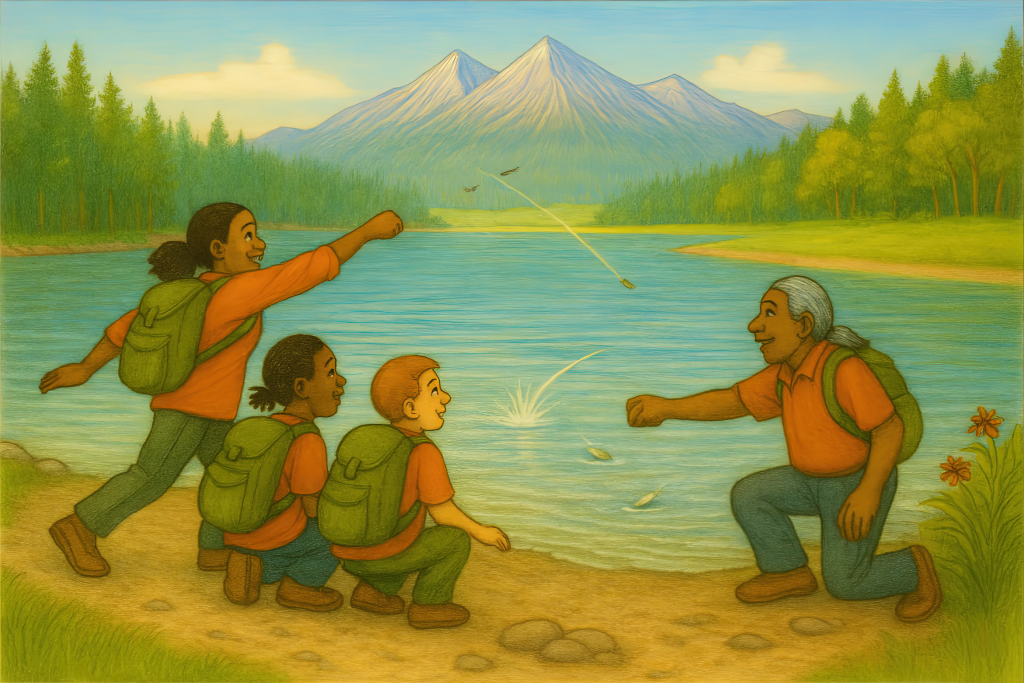
Suddenly the low shrubs opened to the view of a crystal-clear blue mountain lake surrounded by forests on the far side and a soft green meadow before them. A sandbar on the shoreline invited their curiosity. Feeling free from the constraint of the forest trail, as one, the children raced to be the first one there. “It’s so beautiful,” Justine said as she breathed deeply of the clear mountain air. “And it smells like nothing else I’ve ever smelled. It’s so clean and… and undisturbed by anything other than the trees and lake—and those mountains,” she added, pointing across Mirage Lake. Mr. and Mrs. W. smiled broadly. “This is why we do this,” Jess said. “We love helping kids and families who may never have another chance to experience this—see what we see—and understand how important it is. In an ever-changing, technologically advanced culture, we want to value this and show kids how vital it is to our survival, as well as our happiness.” “I see it now,” said Justine. “And I think Malcolm is really getting the idea, too. Even though we’re from a culturally rich part of the country—around the Blue Ridge Mountains—our family is busy. We don’t go exploring anywhere! I think that’s going to change now.” Miles’ mom, Betsy, added, “Miles and I explore occasionally, but we go to very local places around Calgary. Because it’s just Miles and me, we haven’t gone very far into the wilderness, but there are hiking tours that we could take there, and I think we will begin to do more of that now that this door to explorer side has opened up. We’re both learning so much—how to explore, what to look for, and how to be safe while we’re on an adventure!” George Talltree stood quietly and watched from a distance as the three children picked up a few pebbles and threw them, one by one into the lake. Their game seemed to be to see who could throw the farthest. “We’d better get our tents up pretty soon—it’s getting late,” said Mr. W. “But I believe there are three children down there who’ve never skipped a pebble across a lake before… another teaching moment, George?” He smiled at Nia’s grandfather. “I believe you’re right, Steve. We should go teach them another lesson,” he replied. And off the two men strode to join the kids. Soon all heads were down, searching the shoreline as Mr. W. and Mr. G. taught them how to select the perfect, smooth, flat pebble, and how to angle the pitch to make their stone skip once, twice, three times and more across the surface of pristine, mostly undisturbed Lake Mirage.
“Well, moms,” Jess said with her gaze focused on the playful group by the lake, “drop our packs here and start pitching the tents—or join them? Your choice.” “Are you kidding?” Betsy chortled as the pack on her back landed with a thud. She sprinted toward the kids’ happy laughter and the skipping stones. Justine eyed her pack already on the ground, “Nothing here that can’t wait a few minutes,” she said and she and Jess launched their own twenty-yard dash.
Pitching our tents
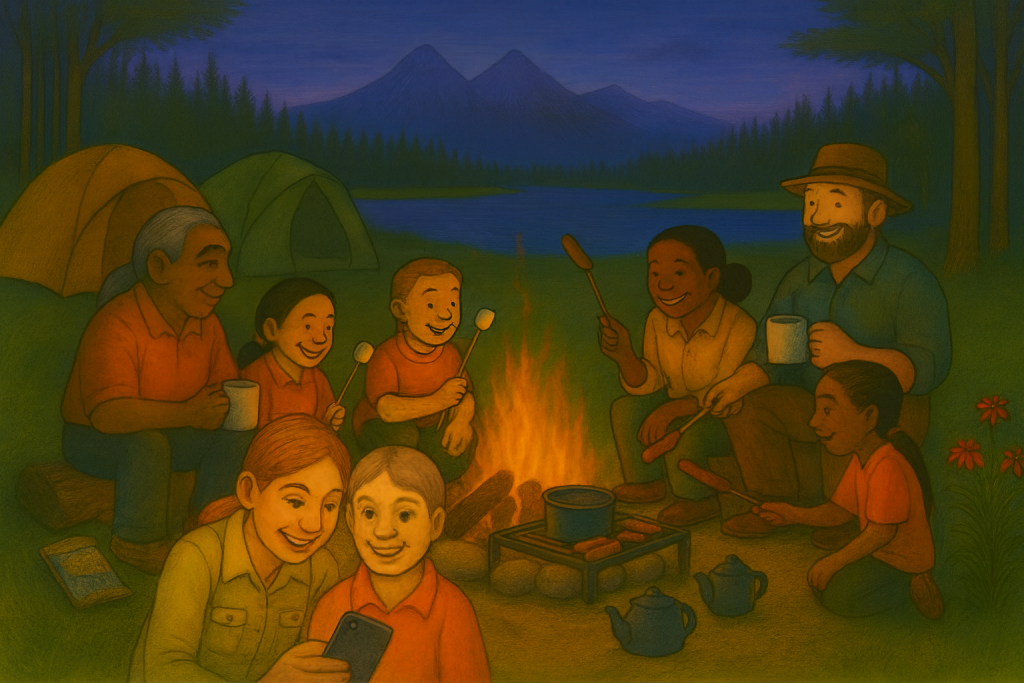
The play soon ended as if on cue and the tired bunch walked together back to the backpacks scattered here and there as if holding the spot for them until they returned. “Okay, team,” Jess called out, “time to pitch our tents!” Malcolm held a tent pole as if it were a javelin. “Okay, Mrs. W. is it time to give our tents a good toss, or should we set them up?” Jess chuckled as she unstrapped a sleeping bag and pad from Justine’s pack. “Let’s go with ‘set them up,’ unless we want our sleeping bags in the trees.” Miles whispered to Nia, “I’d rather not journal from a branch.” “Unless it’s a really poetic branch,” Nia replied with a smile. With some guidance from Jess and the rest of the grownups, the kids unrolled their tents, figured out the poles, and slowly transformed the meadow into a cozy little village of canvas and nylon, with a campfire ring in the center. “Where’d the iron ring come from, Mr. W.?” asked Miles. “The Park Service placed it here in the clearing for us and other campers to use, and for safety, Miles,” Mr. W. answered. “They maintain our trails, keeping them clear of fallen trees or obstacles. We would have a really hard time getting here if they hadn’t built the trail we followed or the bridge we used to walk across Briar Creek. We’re responsible for cleaning up after ourselves, but the Park Service people make sure it’s clean and tidy for everyone. A Park Ranger may even stop by while we’re here to make sure we’re all okay and that we’re all following the rules. I’m always happy to see them. They do a very good job, but it can be a hard job, as well.” “I’d like to be a Park Ranger,” said Nia. “You would be a fine Park Ranger,” Jess smiled. “The way you observe everything and keep your journal—those are already great qualities for a Ranger. “There are so many fields of study in colleges and universities that relate to Park Service—whole studies focused on forests and forestry management, and all kinds of sciences related to nature and environmental studies,” she said. “There are many colleges and universities across the country that offer studies in biology, geology, and ecology. There’s even a study called ichthyology—all about fish,” added Mr. W. “That’s a lot of -ologies, Mr. W.,” Malcolm interjected. “How do I know which one is for me?” “Well, Malcolm,” Mr. W. said, “you may not know right now, and it may not be what you choose to do later, but at least now, after our hiking adventure, you’ll know more about what’s out here, and what some of the possibilities are. You still have time to decide, but now is the time to explore those possibilities.” “That makes sense,” Malcolm concluded. “I think I’ll make a list in my journal about all the -ologies and see if I really like any of them.” They all smiled. “I love this,” Nia affirmed. “I think being out here in nature is what I really want to do. I love the plants and birds and streams and the big lake. I love those mountains too, and I want to go see them soon. Can we, Grandfather?” “Yes, ʔəshəliʔ. That should be our next place we go to learn more,” her grandfather, George, replied. “What’s that word—uh-shuh-lee—you just said, Mr. G.?” asked Miles. “It’s my native language word for ‘my daughter’,” said George. “It tells her with one word how much I respect her and love her,” he said. “What’s the same word but for a son, Mr. G.?” Miles’ curiosity was sparked. “It’s ʔəsx̌il,” George replied in his own language. “It sounds like un-SHEEL to me,” Miles said. “I’m going to write that word in my journal this evening,” said Miles. “I want to remember it because it’s such a nice word…” “You may become a linguist or language instructor someday, Miles,” Betsy said. When Mr. W. made the final rounds to inspect everyone’s tent setup, he noticed that Miles’ tent leaned a little to the left, but Miles stood back proudly. “It’s got character,” he said. “It does, Miles,” Mr. W. agreed. “And it’s standing. That’s what counts.” The light was beginning to fade quickly now as all the tents were finally set up and the wood stacked carefully into the campfire ring. The children watched and learned how to begin with kindling consisting of small twigs, dried moss, and even a few small, dry pinecones included. Mr. W. with the help of Mr. G. hand the kindling blazing almost instantly, then carefully place the dry wood needed to keep it fueled. They talked about the process and fire starters and cautioned about the critical attention to safety needed whenever a fire was built anywhere in the wilderness. As soon as the campfire was going, Mr. W. unpacked the hot dogs, baked beans and corn chips they had all helped pack in. He lined them up on the fire grate, enough for everyone to have two if they wanted. Jess placed a kettle of water alongside and soon enough, the water began to boil as hot dogs sizzled and sweet baked beans bubbled. Slightly flattened hot dog buns appeared along with small camp bottles of ketchup, mustard, and relish.
Conversation ceased as hungry hikers munched and crunched their chips, devouring everything on their plates. “Those were the best hot dogs ever!” Malcolm announced. “They were so good, I’ll never eat another one,” he said, rubbing his full stomach. “And I know that won’t last until we get home, Malcolm!” Justine said. Everyone agreed that they felt the same as Malcolm. Next packets of hot chocolate came out, and, as darkness surrounded them, Jess passed out sticks for marshmallow toasting with graham crackers and chocolate bars on the side for smores. Laughter and happy chatter filled the camp as sticky fingers built delicious campfire treats. Finger and trash cleanup completed, their meal ended with mugs of hot chocolate and mini marshmallows. As the fire crackled, a slight chill crept in, and jackets came on. The lake whispered nearby accompanied by a far-off owl and frog-chorus from the lake’s edge.
Campfire Caution
“Nia, you won our Trailblazer Game today. How would you like to lead our discussion tonight?” Mr. W. asked. “Well…,” Nia began shyly. “To me, the forest walk was beautiful and peaceful, but it also seemed very big—like it was powerful. I felt like I was part of it, but it was still much bigger than me. Even though I knew I was with everyone, and Mr. and Mrs. W. know the way, I got a scared feeling once on the trail. If I were alone—in the woods, away from the trail—I don’t think I’d be able to find my way. “That’s how I felt for just a little bit, like I was lost in those very big trees. Then I remembered my grandfather was with me, and Mr. and Mrs. W. both knew the way. I want to be like them. I want to know what it’s like to find my way.” The group paused, reflecting on her words. Malcolm visibly shivered at the thought of being lost, before other voices chimed in with their own thoughts and experiences. Mr. W. listened quietly, then leaned in toward the fire. “You’re right about the forest being a powerful place, Nia. There’s so much going on around us when we’re out there that we’re not always aware of its ability to take charge. That’s why we have some rules—tried and tested over time—to help us find our way.” “If you’re ever lost in the woods, whether with a group or hiking alone, the first thing you need to do is stop.” “S.T.O.P.—easy to remember.” S is for Stop. Don’t keep walking. You need that quiet moment. T is for Think. What do you remember about where you were last? O is for Observe. Take a breath. Look around. Do you see a familiar landmark? Can you hear your group? A stream? P is for Plan. Stay put, make yourself visible, and wait for help. “Let’s go over it one more time,” Mr. W. said. “S stands for?” “Stop!” everyone shouted. “T means…” “Think!” “O is for…” “Observe!” “And P tells us to…” “Plan!” “Remember, you’re not alone here. So don’t panic. We always look for each other. Nia led us to this discussion so beautifully. Thank you, Nia. Good job!” Everyone clapped. “Thanks, Mr. W. I think I’ll feel a little safer now—like I can find my way if I have to,” Nia said. “I’m going to remember S.T.O.P.,” Malcolm added. “I think I’ll write it in my journal tonight.”
Story of the Forgotten Flight
“This talk of getting lost reminds me of a story told to me by a good friend on one of our river adventures when we were young—just a little older than you,” George said. “Stories are important in our culture. This one is a reminder to plan before you go into the wilderness. Would you like to hear it?” “Yes!” they all echoed. “This really happened many years ago, now. It’s about a boy named Jerry. At the time, he was a little older than you three young people are, and very brave—but maybe a little too brave. One winter, he had someone fly him deep into the Alaskan wilderness with all the supplies he thought he’d need to stay the winter trapping season in an old trapper’s cabin. He had his ingress planned—the way in. But he forgot something important: he didn’t plan his egress—the way out.” “Is that a word from your language, Mr. G.?” Miles asked. “No, that’s Latin, used in English,” George replied. “Jerry forgot something very important—he forgot to ask the pilot to come back for him in the spring. And since he hadn’t hiked in, there was no trail to follow home. He didn’t bring a map or compass. He knew roughly where he was, but not how far from anyone else. “The snow came. He hunted and trapped through the winter. But as spring arrived, his supply of food ran out. The game was scarce. Jerry was stuck, hungry, and alone. He realized he hadn’t planned well. He told himself that if he survived, he’d never let it happen again.” Mr. W. poked the fire. “So how did Jerry survive?” “It was during what the Native Alaskans call the starving time—when even wild animals are hungry—that a boy from a nearby village saw a puff of smoke from the cabin. He didn’t know Jerry was there, but he went to check. “That boy’s name was Kevin, a member of the Athabaskan Den’ani people. Young Kevin and his family saved Jerry’s life. They took him in and taught him how, over many generations, they had learned to survive in wild Alaska. They made him part of their family.” “Jerry learned a big lesson that winter. And now I’m passing his story on to you, so you’ll remember what he forgot: always have a plan to get to safety before you go into the wilderness.” “That’s part of being oriented,” Jess said. “What a great story. Thank you, Mr. G. Does Jerry have other stories to tell?” “Yes. He has so many, that he wrote a book…” “I don’t know about anyone else,” Betsy yawned, “but I am very tired.” “I think we’re all a little tired,” Mr. W. agreed, as yawns spread around the fire. “Time to bank the campfire and call it a night. We’ve got short day hikes tomorrow and a lot to see.” “Goodnight, everyone!” Jackets rustled. Sleeping bags unrolled. The fire crackled low. The lake whispered, and the stars blinked on.
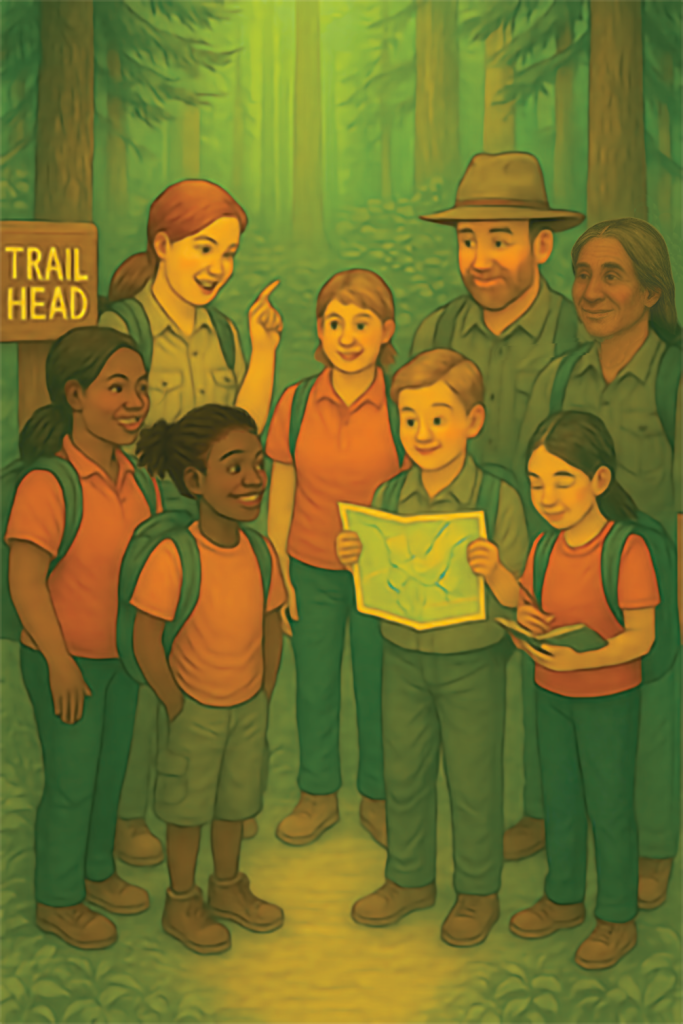
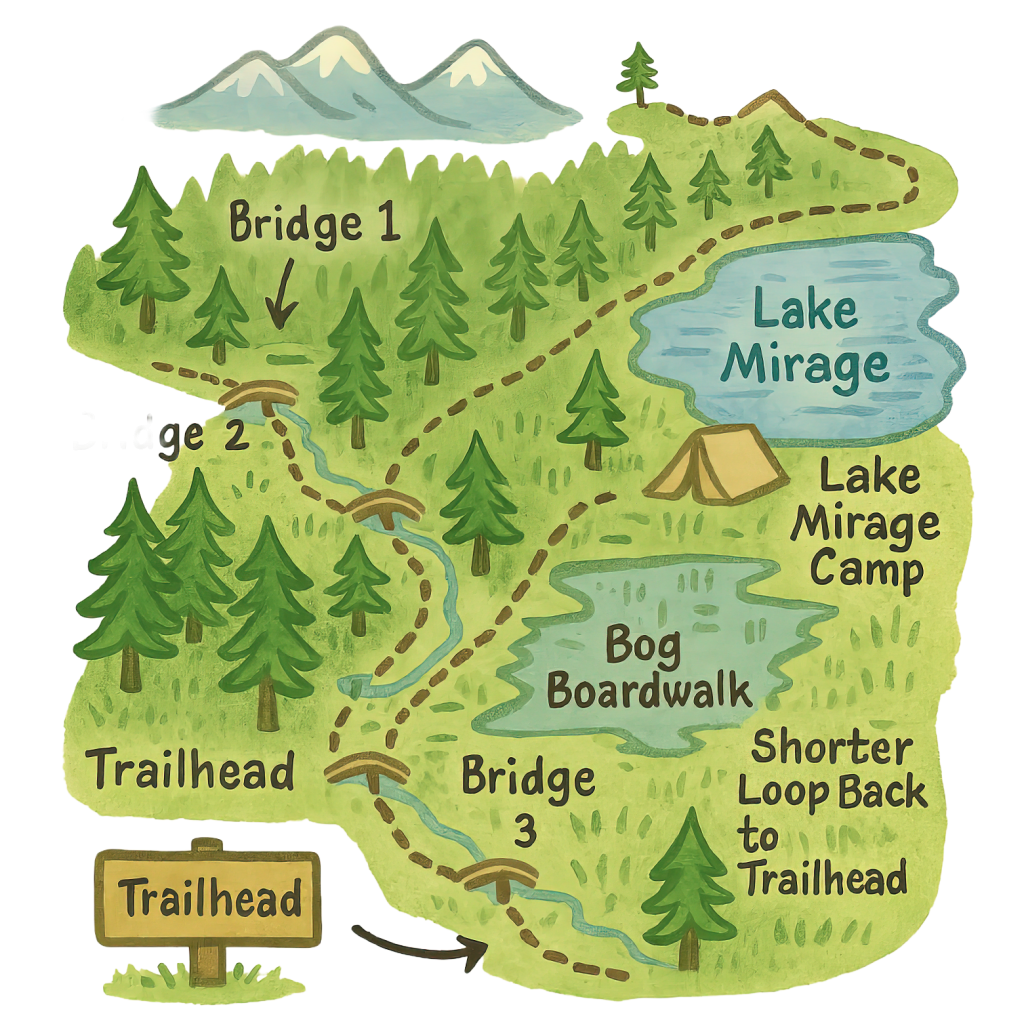
The morning sun filtered through the cedar trees as Trail Guides, Steve and Jess West, met the small group at the trailhead. “Hello, everyone!” Said Jess as Steve echoed with “Goodmorning!” Though they’d all met the evening before at the lodge, this was the first time they’d all stood together beneath the trees, ready to begin. After everyone introduced themselves, Steve, or as the kids called him, Mr. W., unfolded a very detailed trail map and Jess passed smaller copies of the same map to all the hikers. “Does anyone know the word, ‘orienting’ or what it means to be oriented?” Jess asked the group of curious young faces and smiling parents as she handed the last map to Justine, Malcolm’s mom. “I do!” Miles raised his hand and shouted gleefully. “It means to know what’s going on around you!”
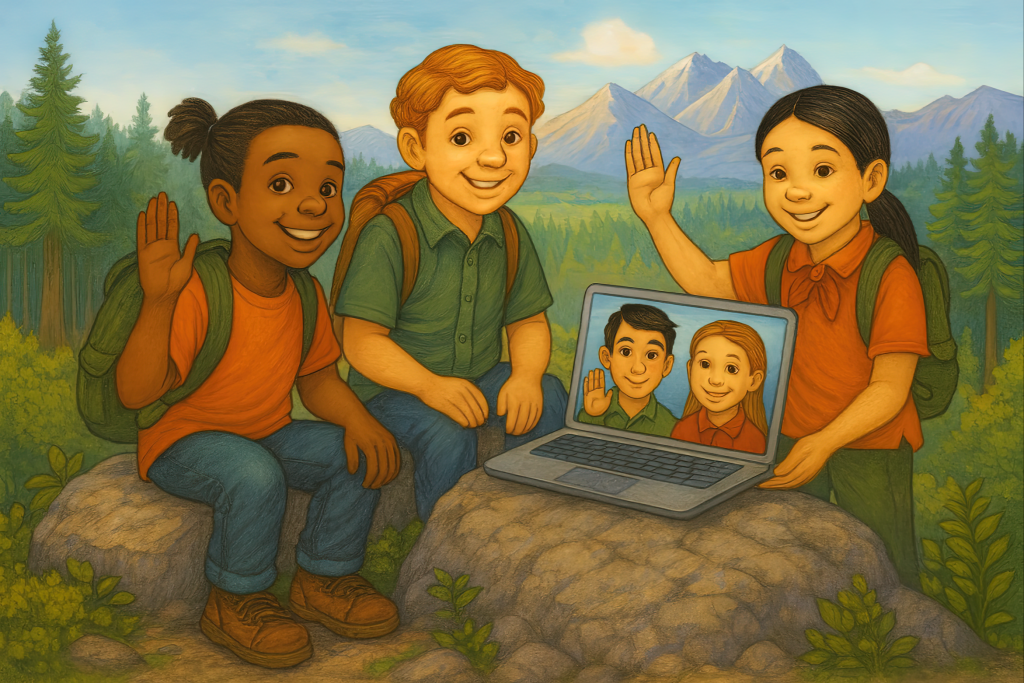
“Yes,” Jess smiled back. “It means being aware of what’s around you—and especially, where you are!” “We call this ability to find ourselves along our path and to know the way we need to go, ‘orienteering.’ And a big part of orienteering is knowing our surroundings, which way we’re going, and how to find our way safely home. For us, it’s going to also include some, Uh-oh! I think I’m lost! rules and basically how we find you, or how you—with all that you know about what’s around you—find your way.” “This is important,” said Mr. W., “and we’ll go over a few things now, and talk a little more about how we help ourselves to find our way as we hike the trail.” “Did everyone bring their compass?” Jess asked, and everyone nodded, yes—even the parents had theirs! “Great!” said Mr. W. “So, gather around close as we go over our map and take a good look at our trail. It’s very important to have this picture in our mind, as well as on the map. We really want to know what our surroundings look like, so we’re not surprised by anything. That’s the first step in orienteering. Let’s look at the map and see what information it contains…” “This is the Trailhead,” he pointed to the spot clearly marked on the map. “This is where we are right now. It’s the place where our hike begins and where it ends, as well. This kind of trail is what’s called a loop trail. We made each one of you a small copy of this map, we want you to keep it with you all the time we’re on our hike! Let’s look over it before we get started, so you all know where we’re going, and where we want to safely return to in three days after we finish our hike and wilderness camping.” “Is everyone ready!” Mr. W. asked the group. “I’m ready!” said Nia. How long will we hike this morning, Mr. W.? Malcolm asked. “Well, it will probably take us about two hours to hike about two miles before we get to our first rest stop this morning. Our pace, or the length of trail we walk in a certain amount of time, will be about a mile an hour. Think of our pace as sort of like how far and how fast a car travels, which we measure in miles per hour. But we have a lot of things to see and talk about as we go. Since our hike is designed to discover new things, we’re not trying to walk at a fast pace. Our pace will be slow—we want to look and listen and even touch new things as we go. That takes time. “Our hiking adventure begins here at our trailhead [CN1], we’ll hike for two miles before we take our first rest stop and connect to Station WIL using our satellite connection. It looks like we have everything packed and ready, so let’s get going now. We have so much more to see this morning before we stop to call Patty and Teo at their Ranger Station studio on the other side of the country! Everyone ready? Let’s go!”
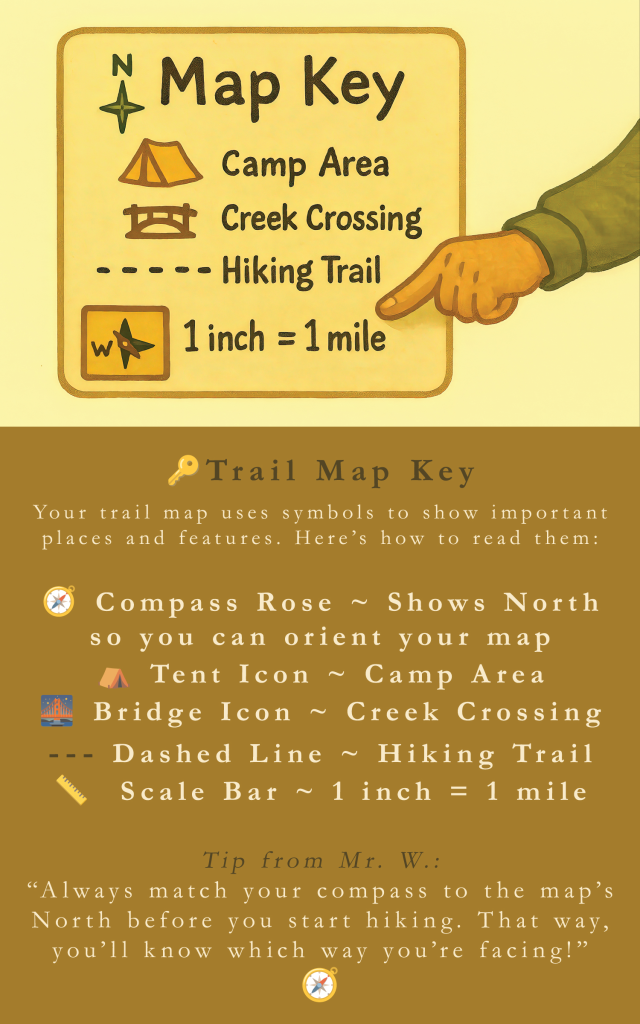
A visual legend for interpreting the trail map. Includes a green compass rose (North), tent symbol (Camp Area), bridge icon (Creek Crossing), dashed line (Hiking Trail), and directional compass with scale (“1 inch = 1 mile”).
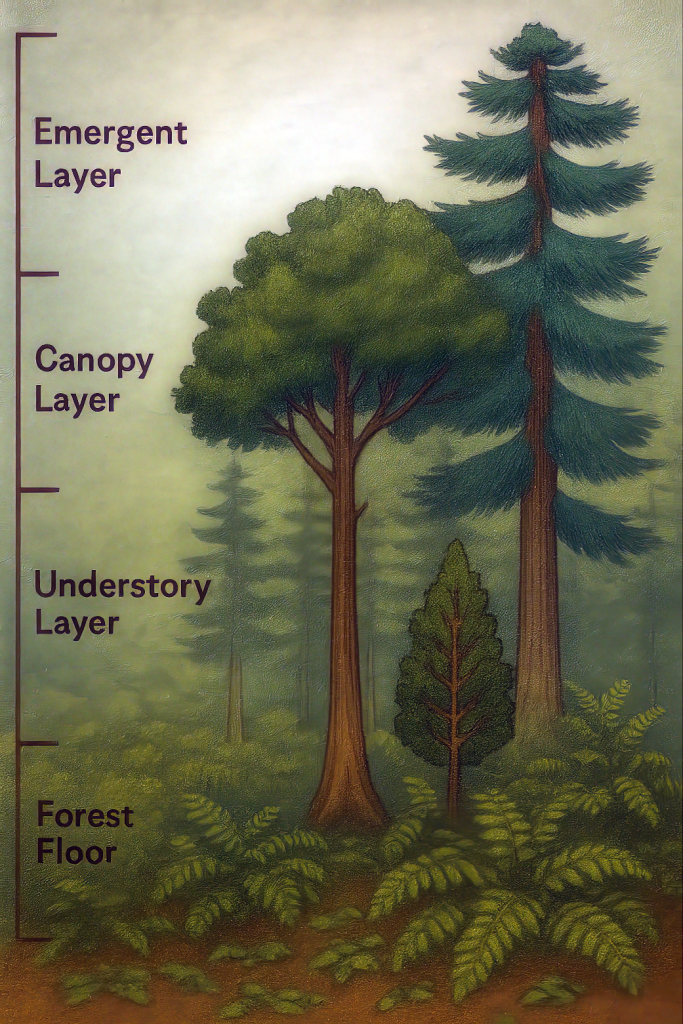
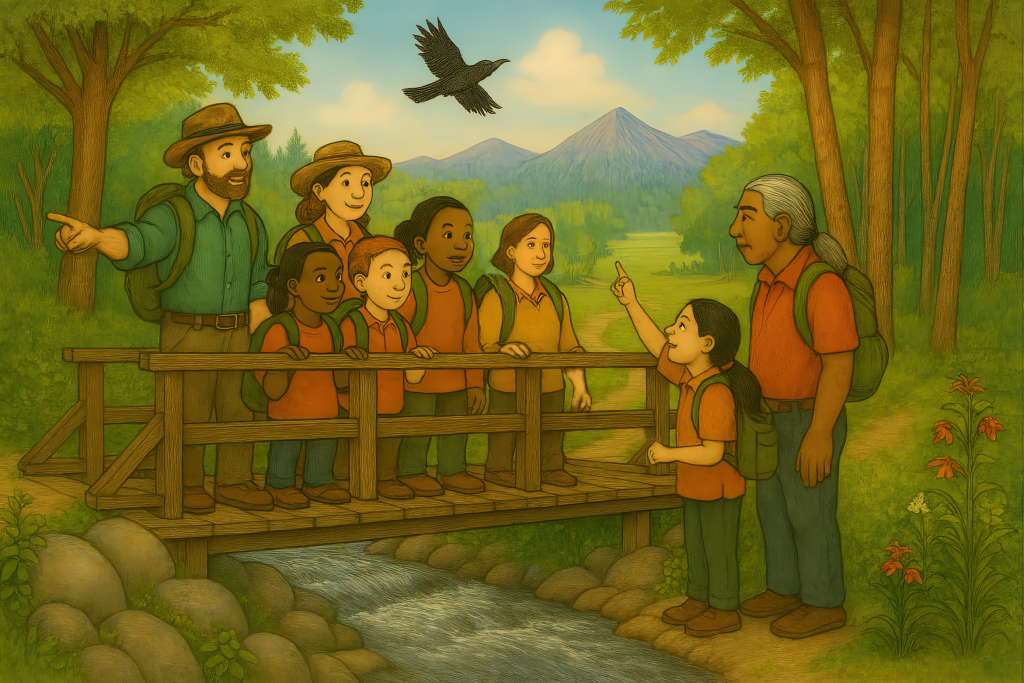
As parents helped kids adjust their backpacks, the five adults and three kids stepped into the dense cedar forest and onto the trail. Immediately, the light dimmed as the tight canopy of ancient trees enveloped them. The air was clean and filled with the fragrance of the soft forest floor covered in pine needles dotted with pinecones and twigs. Here and there, where it was able to catch a beam of light, a lovely green rhododendron abounded in glistening broad-leaf beauty. The stillness was contagious as the group hiked further along the narrow trail in silence for several minutes, until they came to a spot where the trail broadened and they were able to gather in a small group once more. “We always like to begin our hike in silence,” said Jess. “It gives us a moment to become…what’s our word?” she asked the group in general. “Oriented!” beamed Malcolm. Jess nodded, returning Malcolm’s happy smile. “We want to take some time to get to know where we are and what it feels like to be there,” Malcolm added. “But why should we always be quiet?” Miles asked. “Because that’s how we can listen to everything there,” answered Nia. “We need to know if we’re alone in the woods or there’s someone or something close by. Like a squirrel or fox!” she added as her grandfather smiled with pride. “We also want to pay attention to how everything smells,” said Mr. W. “Smells brought to us on the wind can tell us if everything is okay up ahead of us or even behind us. We need to know these things to keep ourselves safe.” The group stood quietly testing the slight breeze filtering through the forest. “It smells like the earth should smell,” said Nia. “Like it’s old and kind and good.” “Yes,” said Nia’s grandfather, George Talltree. “Look at these ancient trees,” he pointed to one of the giants close by with its trunk so wide that two children could barely wrap their arms around it. The bark was deeply furrowed, soft to the touch, and carried the scent of rain and time. High above, the canopy filtered sunlight into shifting patches, dappling the trail with gleaming white light and shadow. The children could see glistening dust particles and tiny insects floating through the beams. “Look at this!” cried Malcolm as he gently pushed his feet into the plush forest floor beside the trail. Everyone began to look at the ground now, searching as if really seeing it for the first time. The forest understory whispered with life—ferns curled like question marks, moss blanketed fallen logs, and tiny mushrooms peeked from the pine-needle carpet. A squirrel chattered somewhere overhead, unseen but clearly unimpressed by the small gathering below. After a few minutes, Jess knelt beside a mossy stump and placed her compass flat. “Let’s take a moment to check our bearings,” she said. “Who remembers how to match the compass needle to North?” Malcolm crouched beside her, eyes bright. “We turn the dial until the red needle lines up with the N,” he said. “Exactly,” Jess smiled. “Now look around. What do you see behind us?” Nia turned and pointed. “The trail curves past that big cedar with the broken branch. That’s our backtrail.” Mr. W. nodded. “Always know what’s behind you. If you ever need to retrace your steps, your memory of the trail will help you find your way.” Miles looked up. “So, we’re not just hiking forward—we’re remembering backward too?” “Exactly,” said Jess. “That’s part of being oriented. We know where we are, where we’re going, and how to return to the trailhead or our last safe spot if we need to go there.” “Let’s play a game while we hike—we call it the trailblazing game. The person in the lead gets to take us to the next question or stopping point on the trail. After we stop to have our discussion, we switch trailblazers. The one with the most questions gets to lead the trail roundup discussion around the campfire this evening. Who wants to be the first trailblazer now?” asked Mr. W. Both Miles’ hands quickly shot up as he jumped along with them. “Alright, Miles, why not take the lead until we reach our first question mark on the trail, he laughed. “I’ll be right here behind you if you need help, and Jess will stay behind us all with your mom’s and Nia’s grandfather to make certain we’re all okay. Don’t hesitate to ask that all-important question as we go. We’re on a discovery hike, remember? We want to learn about everything around us, and we can’t learn if we can’t or don’t ask questions, right?” “Right!” Everyone chimed in. They took about ten steps before Miles pointed to a very leafy green bush beside the trail. The group halted at the bush to listen to Jess. “That’s a rhododendron bush,” she said. “It’s part of the understory of this forest.”
“What’s an understory?” asked Betsy, Miles’ mom. “While this forest isn’t the same as a jungle forest, just the same, the tops of these tall cedars form a canopy over the forest floor or the ground we walk on, and all the larger plants that grow and thrive in the shade and soil produced by these trees are its understory,” Jess explained. “These plants and the smaller ones in the shrub layer are what help the wildlife survive. Although, every part of the rhododendron plant is poisonous—oh, you can touch it, Malcolm…it’s only poisonous for us to eat any part of—it helps small creatures find hiding places from storms, and when it’s blooming in the spring, the flowers help feed the pollinators—like the bees—allowing them to survive in our forestlands.” “The roots of the trees and shrubs keep the soil or what’s called the forest floor soft and allow water to be stored close to the surface during dryer seasons. It produces mist in the mornings in the forest, and it all works together for the good of the plants and animals who call this forest home,” added Mr. W. “Let’s hike on up the trail and see what else we can find. Nia, it’s your turn to lead the way!” As they ventured further along the trail, their pace slowed until the wonder of their surroundings brought them all to a standstill.
The forest pause & orientation
The group stood quietly beneath the towering cedars, their trunks wide enough that two children could barely wrap their arms around one. The bark was deeply furrowed, soft to the touch, and carried the scent of rain and time. High above, the canopy filtered sunlight into shifting patches, dappling the trail with gold and shadow. At their feet, the forest understory whispered with life—ferns curled like question marks, moss blanketed fallen logs, and tiny mushrooms peeked from the pine-needle carpet. A squirrel chattered somewhere overhead, unseen but clearly unimpressed by the intrusion. Jess knelt beside a mossy stump and placed her compass flat. “Let’s take a moment to check our bearings,” she said. “Who remembers how to match the compass needle to North?” Malcolm crouched beside her, eyes bright. “We turn the dial until the red needle lines up with the N,” he said. “Exactly,” Jess smiled. “Now look around. What do you see behind us?” Nia turned and pointed. “The trail curves past that big cedar with the broken branch. That’s our backtrail.” Mr. W. nodded. “Always know what’s behind you. If you ever need to retrace your steps, your memory of the trail will help you find your way.” Miles looked up. “So, we’re not just hiking forward—we’re remembering backward too?” “Exactly,” said Jess. “That’s part of being oriented. We know where we are, where we’re going thanks to our map, and how to return to the trailhead or our last safe spot if we need to go there.”
Ever higher
As the group moved on again, they noticed the trail had become slightly steeper and they were climbing a little as they hiked. Mr. W. told them that they were headed to the highest point of their trail. “The elevation here is just over 600 feet, so we’re not mountain climbing,” he said. “We’re just walking to the top of this knoll or small hill within this mountain range.” The trees thinned a little as the path guided them into a clearing and onto a small rocky knoll where the forest ahead seemed to part before them just so they could take in the spectacular view across the treetops toward the majestic distant mountain peaks. The tallest was still snowcapped, and the sight was breathtaking. Again the group stood in awe as Jess and Mr. W. named the peaks before them, telling their individual stories and mountain legends. While the guides talked, Nia found a rock just her size to sit on. She rummaged through her backpack until she found her journal sketchbook and small collection of pencils. With her own artistic eye and hand, she began sketching the scene before her—forest treetops and mountain grandeur. As she worked, the scene began to take shape on her journal page. Nia sketched with the assurance that no one else needed to appreciate her beautiful mountain scene besides herself. Her father watched her work as his studying gaze shifted between her page and the scene before him. Malcolm and his mom, Justine, stood with the guides, pointing to the peaks and asking questions about their size and age and how far away they were from them. Miles and his mom stood listening as they talked while taking in every feature of the panorama before them. Miles didn’t want to forget any of this. “You should get out your camera and take a picture of this,” Betsy said. “Although the picture is never as perfect as seeing it for yourself, that photo will help to always bring the scene back to you. Here. Let me help you get your camera out of your backpack.” [IMG: Visual needed for this scene.] “We should call Patty and Teo at Ranger Station WIL from here, Mr. & Mrs. W., Miles said after his final photo. They would probably like to see all this too!” “That’s a great idea, Miles!” said Jess. We’re out of the trees and up high enough that we should get a good satellite connection from here,” she added. Mr. W. helped get the mini satellite dish set up on one of the largest rocks while Jess unpacked the laptop. The clearing was rocking enough that the laptop had its own rock to rest on and the kids each had a seat to sit on. Malcolm and Miles’ moms had their own rock chairs while Steve and Jess chose to stand behind the group so everyone could be on camera. It was a perfect setup for a perfect scene. Jess checked all the angles and made certain she could get the laptop back to the same position after they moved it to show Teo and Patty their surroundings. “This is going to be awesome!” Malcolm cheered.
Satellite Link to Station WIL
With the satellite connection established, the group gathered around the laptop as Jess initiated the video call to reporting rangers Patty and Teo at Ranger Station WIL. The screen flickered to life, and soon familiar faces appeared, smiling and ready to hear all about their morning hike.
Patty greeted them warmly, “Hello, everyone! It’s wonderful to see you all out there in the forest. How’s the hike going so far?” Malcolm, Miles, and Nia were so excited and had so many things to tell, that they hardly knew where to begin, so they sat quietly beaming at the image of Teo and Patty for just a moment until Steve spoke up. He shared their progress, and Jess suggested the kids begin by telling Teo and Patty where they were right now and the breathtaking views from the knoll. Nia was the first to move and she got up and picked up the laptop to pan the camera around their knoll to the far off mountains, but first a look back at the forest they had just walked out of. This is where we came from, Teo and Patty. We were in that forest and we walked out onto this hill or knoll where we are now,” she said as she panned the camera back to everyone seated on the rocks. They all smiled and waved. “…and this is what we’re looking at right now,” Malcolm hopped up as he took charge being the ranger’s anchorman and tour guide. He stretched his arm toward the faraway mountain vista and stepped aside as Nia moved the camera closer to the edge of the rocky knoll. Miles hopped to the side of the camera shot to begin a report on why it’s so important to know all about your surrounds. “Mr. W. said that Alaskan Bush Pilot and adventurer Jerry Jacques said it’s all about situational awareness. ‘What’s going on all around us, no matter where we are!” Jess popped in and quietly took the laptop camera while Nia jumped into the shot, as well. “We have to know where we’re going—looking ahead—but look back and remember our backtrail, too!” Nia said. “We learned so much this morning. I hope I can remember it all.” “We looked at maps this morning and studied them, and how to use our compass with our maps. Mr. W. said there’s lots and lots more to know about ‘orienteering’ but we’re learning some basic stuff. We can always study and look for more information on the internet to become better orienteers,” he said. “We studied about those big cedar trees and what was in the forest we were walking through. We learned about the big trees being a canopy and the smaller bushes being part of the understory,” Nia said proudly of her new knowledge. “We even learned the names of some of the bushes like rhododendron and studied the ferns and mushrooms and moss that are what Mrs. W. called part of the ‘forest floor,’” said Miles. “Wow! You guys are learning so much!” I wish we were there with you!” Teo said as Jess kept the camera focused on the three smiling faces, beaming broadly before a background of lush treetops and majestic mountains. “It sounds like you’re having so much fun while you’re learning all this new stuff about the forest and wilderness, too,” Patty chimed in. “Yeah! We even played a game to see who could lead the way on the trail and ask questions. We learned a lot just by asking questions,” Miles said. “I think Nia won, so she gets to lead the campfire chatter tonight.” “Well, we have a better understanding of your trail so far,” said Teo, “and we want to hear so much more this evening when we have our own virtual campfire chatter on our Teams connection. We better sign out for now because we don’t want to run your laptop battery too low.” “We can’t wait to hear more this evening, and we’ll let you know what our fans think about this broadcast report. Till then, thank you everyone, and stay oriented and happy on your trail!” “Hike on!” became their signoff and the rallying cry for the hikers to get going again. After their lively exchange, and the group said their goodbyes, they were all feeling more connected and inspired to continue their adventure. Jess carefully packed the satellite equipment then checked her watch, and before they all got up, she announced: “It’s 11:30, just a little early, but I think this would be a perfect spot for our lunch break. We still have a few miles to go before we get to our campsite, but I think it would be a good idea to have our trail lunch now and perhaps get to our campsite a little early. There’s lots of stuff to see there, too, and we could all use a little food fuel to keep us going…right?” “Right!!!” Three very lively kids and three not-so-lively parents chimed in as one. Lunchtime on the beautiful rocky hilltop was perfect with cool water to drink, tuna fish and peanut butter and jelly sandwiches, some mixed-nut trail mix and dried-fruit snacks to polish it off. At the end of their meal, everyone began their own cleanup into special trash bags they brought with them in their packs. Each pack had become just a little lighter now as some of their food was consumed, so carrying their trash out with them added nothing new to the weight of their packs. “Alright, hikers,” Mr. W. said as they finished their cleanup, “let’s get our backpacks strapped and hike on. We have more trails to explore and more discoveries ahead! We’re scheduled to get back to them tomorrow evening while we’re around our campfire. There is a big time difference between where we are here on the trail in Oregon and where they’re located in southern Pennsylvania. They are actually four hours ahead of us. So, we’ll call first thing in the evening after we complete our day hikes to update them on our progress. But, for today, let’s keep hiking. We want to have plenty of time this evening to pitch our tents and get our campfire going before dark.” Malcolm exchanged a puzzled glance with Miles at Mr. W.’s last sentence then shrugged, smiled, and walked away. They continued their journey down the trail, energized by their yummy trail lunch and so excited with all the stories they had shared with Teo and Patty via their satellite connection to the other side of the country.
Afternoon on the trail
The trail on this stretch wove up and down for a while, but soon the hikers were in a gradual descent. They began to notice and identify a few other trees, such as a few Douglas fir, which Mr. W. said was the state tree of Oregon, and one or two Western hemlocks. They moved along quietly now feeling the noonday warmth and listening to the deep-forest sounds. “Stop and listen,” said George. “Do you hear the woodpecker. That bird is looking for food in the tree it’s. That’s how it works to earn its living,” he said. Nia and all the others stood quietly to the sound of the far-away tap, tap, tapping. “That woodpecker is named a Red-Breasted Sapsucker,” Jess said to the giggles of the two boys. “Yep, that’s its name.” “You boys are lucky your parents named you Miles and Malcolm,” Mr. W. grinned, and now it was their moms’ turn to giggle. “Listen a minute longer,” Jess held up a cautionary hand to keep the group from moving. “Can you hear the little flute song the thrush sings?” They all listened intently for a moment. “I hear it! It’s so beautiful,” said Nia softly to her grandfather. “That could be your song, Nia,” George said as he smiled to his daughter. “You should keep that music in your heart as your very own, now.” “Do you have a special bird’s song of your own, Mr. George?” Malcolm asked. “Yes. Mine is the sound of the raven. I’ve had it for a very long time,” he said. “What does a raven song sound like?” “It’s not an easy sound. The raven sounds like he is speaking inside a cave…not like a crow who shouts a caw for his song. But to me, the raven speaks of quiet mornings in a canyon, when the world still felt new.” His words added to the stillness. Mr. W.’s voice soon broke the silence. “We’ll probably hear some crows cawing soon,” said Mr. W. “but we may not hear a raven today. There are more crows here than ravens.” A squirrel broke their thoughts as it chattered above, then began leaping across the trail as the group moved on. “I wish I could jump like that,” said Miles watching the aerobatics above. As the hikers turned a bend, a doe and her fawn stepped onto the trail ahead. She stopped motionless for a moment to look their way, then flagged her long tail with a flash of brilliant white and jumped into the woods followed closely by her young spotted fawn. “Wow! That was awesome! Beautiful!” The hikers’ voices echoed one another. “She’s probably taking her baby down to the stream for a drink right now,” Jess said. “Their version of a mid-day break.” “And we’ll be at the bridge-crossing of Briar Creek in about ten minutes, if we keep moving as well,” Mr. W. said. “It’s running down from that taller peak on our right, cutting its way through the forest on our right, headed toward our campground beside the lake. And what direction are we heading?” “Our heading is to the northeast!” shouted Malcolm. “Exactly right,” said Mr. W. “So that peak on our right is on our east side, or what we call our east flank.” More daylight was visible now through the canopy as the trees thinned. Just then, a crow flew overhead and another on a branch nearby uttered his distinctive “caw.” “There’s a crow!” Nia pointed to the fleeting black bird above. The conversations began again about birds and streams and deer along the trail, when suddenly the forest was behind them. The giant cedars and Douglas fir, and hemlock gave way to a meadow clearing with tall red alders along the trail. As they walked further downward, the trail meandered around some smaller boulders. Suddenly, the sound of running water began to fill the air, a gentle crescendo guiding their steps. Cutting their path, a tumbling stream—Briar Creek— cascaded over the rock bed it had carved, its channel shaped over many decades. The hikers gathered quietly on the bridge, soaking in the moment—just as many had done before them. They stood in silence, each one tracing the stream’s journey with their eyes, as if following a story written in water. Trees sheltered the stream as their gaze followed its course upward toward its source on the mountain, until Jess pointed their attention to the downstream where the terrain flattened and opened up revealing a grassy meadow, lightly dotted with alder shrubs, bramble thickets, and wild blueberries. The stream slowed and widened in the meadow, still adhering to its bank, but more peacefully as it ceased its wild course down the mountain. “Come on, hikers,” Mr. W. waved the group forward off the bridge. “Hike on! The campground is just ahead!”
PATTY: “Hello everyone! This is Roving Reporter Patty Pan along with her brother and Intrepid Cameraman, Teo Alefaio! Greetings dear fans. We’re coming to you live from our cozy home studio—via trusty Teams, of course! “Teo and I would like you to ‘Meet the Trail Team’—our contributing reporters who are—at this very moment—all the way across the country on a hiking and orienteering (finding their way) expedition along a great cedar forest and mountain trail in Oregon! Let’s introduce you to everyone, and then we’ll talk about what they’re going to do over their three-day hike, as well as what each one of them wants to learn! From left to right, we have Malcolm Reed, Miles Tenny, and Nia Talltree! Seated behind them are their fearless guides for this fun-filled field trip, Jess and Steve West! We won’t see them on-camera, but ever-present are Malcolm’s mom, Justine (his dad flew on to visit some of his clients nearby), Miles came from Canada with his mom, Betsy, and Nia is accompanied by her grandfather, George. The parents are along as chaperones and camp managers for their kids!”
TEO: “Let’s begin with Malcolm! Malcolm, you’re from the foothills of the Blue Ridge Mountains in southern Virginia. A very exciting place to live, I think! What made you decide to go on this camping, hiking, and orienteering field trip?”
MALCOLM: “Mom and dad said I could come! They saw this really cool ad in one of their journals for a three-day field trip for kids along a part of the Pacific Crest Trail in Oregon. Mom’s been here before, and she said it was beautiful! So, she and dad decided it would be a great experience for me. So, she came with me, and my dad flew us all the way out here on his little plane. It took a while, but it’s great to be here! This is our first day, and I’m learning so much already!”
PATTY: “What are some things that you’ve learned already, Malcolm, and what are some more things you want to learn about?”
MALCOLM: “I’m learning about what my guide told me was called ‘orienteering.’ It’s the right word for reading maps and using a compass, and I’m going to learn more about that and maybe even a little bit about how to find my way if I’m ever lost in the woods!” At this, Malcolm shudders a little.
TEO: “Don’t worry Malcolm—we’ll all learn together! And we can’t wait to hear more about what you’re learning. We’re going to connect with every one of you over the next few days to see how your hike is going! Next, we get to meet Miles.
PATTY & TEO: Hello, Miles!!
MILES: “Hello Teo and Patty! I’m having so much fun already! I’m learning what to pack in my backpack every day for my hike, and everybody is so nice.”
PATTY: “That’s awesome, Miles! Where are you from, and who came with you for your hiking adventure?”
MILES: “I came here all the way on the bus with my mom. She’s hiking with us and helping me carry my gear and taking pictures. We came from the city Calgary in Canada. We have lots of mountains and woods around us there, too, but Mom said we should take a trip so I could meet some new friends and learn something new. I love trees and the mountains and rocks, and I love my mom for bringing me here!” Miles scrunches his shoulders and smiles.
PATTY: “I know you’re going to have lots of fun, Miles!” TEO: “Next, let’s meet Nia!”
PATTY & TEO: “Hi, Nia!”
TEO: “Are you excited about your hiking adventure, Nia?”
NIA: “Oh, yes! I came with my grandfather! We’re Native Americans from the Salish tribe! I like to draw things in nature. That’s how I keep track of the things I see and when I see them. I brought my sketchbook that is like a journal, too. I make my drawings and then I write about it, and Grandfather said to always put the date I drew it and the place where I saw it, so I could remember when I got older. It’s good to remember our stories, and my journal will always help me. Grandfather said to not just draw it and keep the date and the place, but he said I should also write about how I feel about something that means something special to me. I love and honor my grandfather, too!” Nia lowered her head a little and smiled broadly.
PATTY: I can’t wait to see your drawings, Nia! I love to draw and journal the things I see, too! I am so happy you’ve come on this hike, and Teo and I are looking forward to getting to know you and Malcolm and Miles so much better over the next few days!
TEO: Next, we want to meet your guides for your three-day hike. Everyone, please meet Steve and Jess West! Steve, I understand that you were a forest firefighter before you and your wife, Jess, began this hiking school for kids and grownups who want to learn just a little bit more about their hiking trail, and Jess, you are an ecologist and the main chef for the Wilderness Walkers Hiking School, and you’re going to teach the kids about foraging and safe cooking over the campfire. Can you both tell us just a little bit more about the Wilderness Walkers Hiking School and what our readers and viewers can expect over the next three days, please?
STEVE: Hello Patty and Teo!
PATTY & TEO: “Hello, Steve!” They wave.
STEVE: “Yes, we started our WWHS because, basically, we love to hike, we love trail, and we want to share what we know and learn how to be safe and have fun in the wilderness. I used to fight wildfires in wilderness just like we’re walking in, and I want us all to learn how to be careful and safe but still have fun hiking the trails our Trail Rangers work so hard to maintain for us. So, I’m looking forward to walking with Malcolm and Miles and Nia, along with their parents and learning a lot while we all just have fun…and eat a lot of good food, thanks to Jess teaching us how to cook safely and what to eat out on the trail. Jess is also our tree, plant, and if possible foraging guide.” Steve exchanges a smile with Jess.
PATTY: “Jess! Hello!”
JESSE: “Hi Patty and Teo! It’s so great to meet you both! Yep, I’m the forest plant guide and the cook! It’s my job to teach about the trees and plants we encounter on our hike, as well as make sure our water is fresh and clean and plentiful, and that everyone gets enough to drink. We can filter our water along the way, but because we have to pack everything we eat in with us, just like we pack everything we’ve brought back off the trail when we done. So, it’s important to learn what we need to bring with us to eat, whether or not we can find anything on the trail to eat—and what not to eat along the trail. We want these kids to grow to love hiking and exploring the world around them. And we think that’s pretty important.” Jess ends with a smile.
TEO: So, let me also introduce the wonderful parents who are accompanying our trio and their guides, we have Malcolm’s mom Justine, and Miles’ mom, Betsy, and Nia’s grandfather, George! Welcome to you all—the kid’s backup and support team! Yay! Thanks for coming along! The camera pans over from the laptop and the parents all wave and say hello to Teo and Patty. Then back to the three kids.
PATTY: You all look so wonderful and happy to be going on the trail! It looks like we’re out of time for this first meeting, here at Station WIL. We’re here on the East Coast and it’s 8:00 p.m. now, so it’s four o’clock on the West Coast. You’re going to begin journey in the morning and you should be well on your way by the time we talk at noon tomorrow. We want to thank you again for sharing you adventure and introducing yourselves to us. Tomorrow evening, we’ll be joining you once again for a short round up of your first day and you can show us around your campsite. You’ll be taking some pictures, Nia, I think you love to journal as you go, just like me, so we can’t wait to see what you might have to share with us as well! So exciting…
TEO: So, we will wait for your call over our Teams Chat tomorrow to see how the hike is going. All our fans really want to know, and we will show our recorded conversation to our fans as you guys continue your hike. So, the East Coast Ranger Station WIL duo of Teo and Patty bid goodbye to the three trail hikers, their parents, and the guides in Oregon.
PATTY & TEO: Bye for now everyone! Stay safe, have fun, and enjoy the adventure!
EVERYONE AT THE LODGE: “Bye for now Teo and Patty!” And Steve logged off and closed the laptop, tucking it back in his backpack. Jesse closed the little internet satellite connector and packed it in her backpack for tomorrow’s hike.
Backpack packing
“Let’s go over our checklists one more time,” she said. “Steve, will you help everyone load their gear into their backpacks as we review the checklist. There’s an art to packing your gear, and we’re here to help get it right for this hike so you can get to the stuff you need first, then the other stuff you only need at the campsite will go on the bottom of your packs…first things that go into the pack will be the things you need last!” Three puzzled kids and three inquisitive parents waited for Jess, who smiled, clapped her hands, and gave the order: “Let’s get packing!” Activity began in earnest now. Checklists came out and items like tents and sleeping bags and spoons and forks laid out before them, all looked like way too much to go in those little packs to be carried on those little backs. “All this gear is important for your hike. That’s why we sent that list of everything to bring with you. Now we’re going to spread out the pack-load between you kids and your parents,” said Mr. W. “We’ve done this many times and know what you need and basically when you’ll need it. But most importantly—we how to pack it all in those little packs of yours.” “Let’s get this done so we can all have dinner here at the lodge and then get a good night’s sleep,” said Jess. And, with that, packing the backpacks began in earnest.